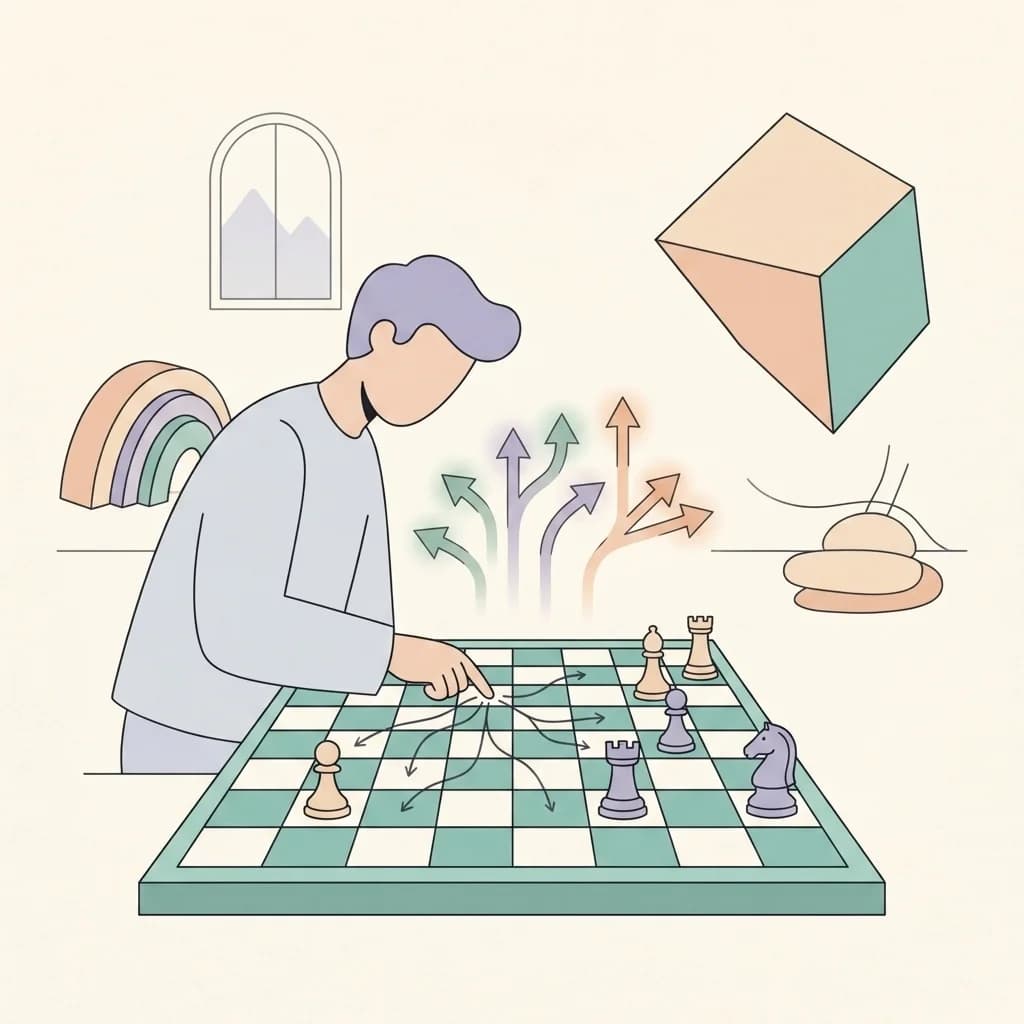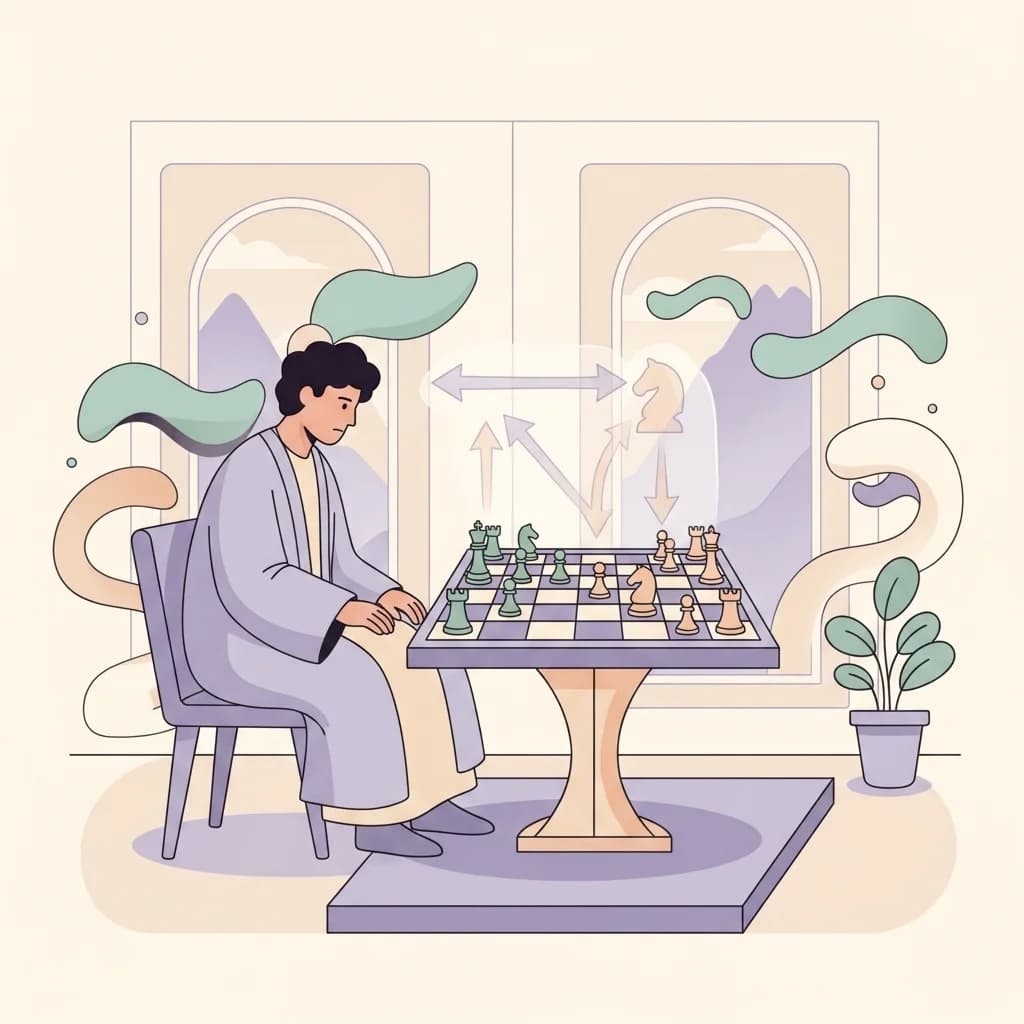

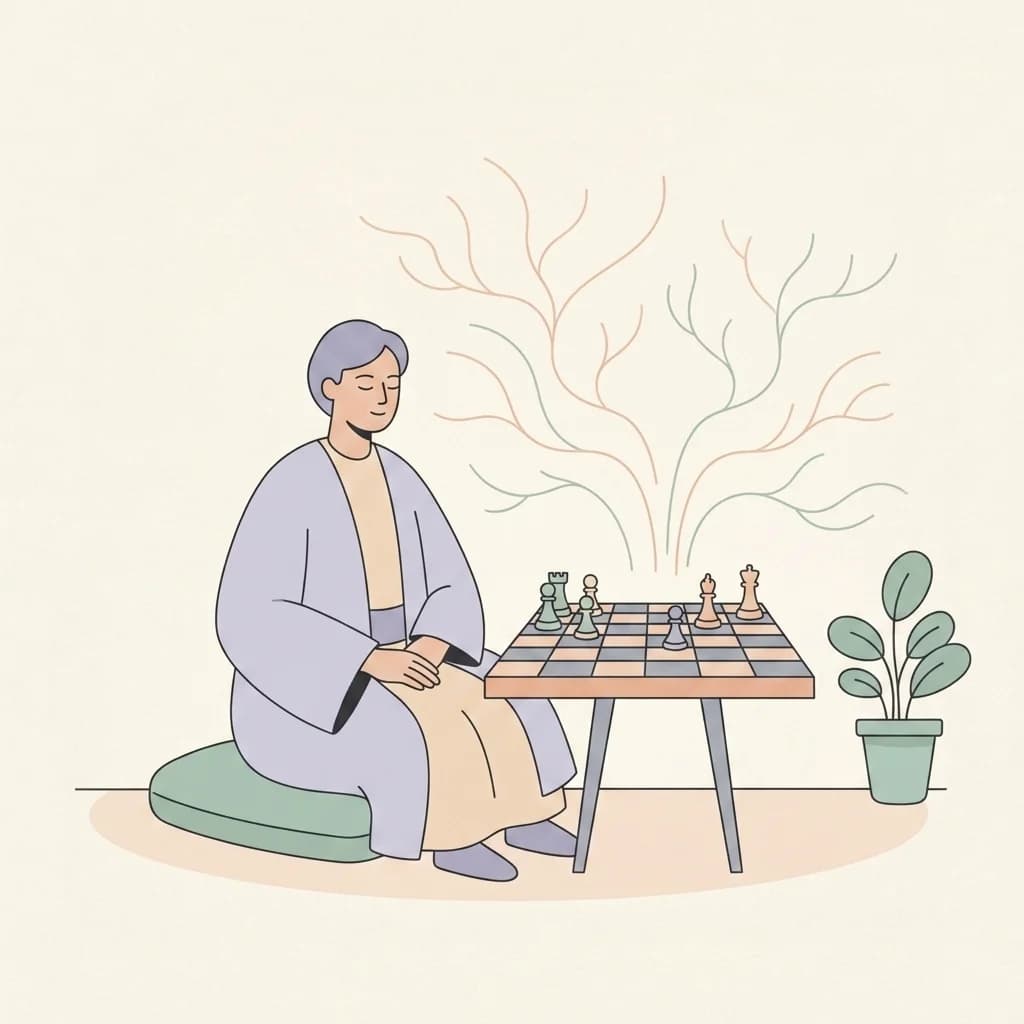
If you want to calculate better in chess, the first thing to understand is that panic is not really a calculation problem.
What kind of player are you really?
It is a process problem.
Most players do not fail in sharp positions because they are incapable of calculating. They fail because the position creates pressure, and the pressure dismantles their method. They see one forcing move, rush into one line, lose track of the opponent's resources, and then blame "bad calculation". The calculation was fine on paper ; the scaffolding around it collapsed.
Good calculation is not about seeing further. It is about thinking in the right order. The calmer your method is, the less likely you are to panic when the board gets tactical. The goal is not to become a human engine. The goal is to become more disciplined when the position demands accuracy.
Why players panic when they calculate
Panic usually appears when three things happen at once : the position becomes forcing, the consequences feel immediate, and you stop trusting your own thought process.
In practice, it looks like this : you see a check and feel you must react now ; you start one line and realize halfway through that you forgot the reply ; you fall in love with one attractive idea before comparing alternatives ; you feel short on time and start moving faster instead of thinking better. The board is not actually chaotic in most of these moments. Your inner process is. If you want to calculate better in chess, you need a method that still holds when the position becomes uncomfortable.
Start with candidate moves, not with panic
The most practical way to stabilize your calculation is to begin with candidate moves. Before you calculate deeply, pause and ask yourself what your forcing options are, what the opponent is threatening, and which moves actually deserve serious attention.
Usually that means scanning four quick buckets.
- checks
- captures
- direct threats
- defensive resources if you are under pressure
This step matters because panic usually comes from falling in love with the first move you notice. Candidate moves slow that down ; they force you to compare instead of react. Even in a sharp position, you rarely need ten moves ; two or three serious candidates is enough to make the board feel manageable again. If your tactical work still feels impulsive, how to work on chess tactics without guessing is the natural companion piece.
Calculate one branch at a time
Once you have your candidates, calculate one branch cleanly before jumping to another. That sounds obvious, but most players panic exactly because they mix branches together in their head.
They start with one candidate, interrupt themselves with a second, remember a threat from the first, and suddenly they are no longer calculating ; they are juggling fragments. A more stable process goes like this : pick one candidate, identify the opponent's best reply, continue the line until the position is clear enough to evaluate, return to the root position, then move on to the next candidate. It is slower than impulse, but dramatically faster than confusion. The goal is never to calculate everything ; it is to calculate clearly enough to trust your final decision.
Train visualization discipline, not just depth
Players often say they want to see more moves ahead. Most of them would improve faster by seeing fewer moves more clearly.
Visualization discipline means holding the current branch accurately, updating piece locations carefully, refusing to invent moves that are no longer legal, and noticing when the position has changed enough that your old idea no longer applies. This is where panic becomes dangerous. Under pressure, you stop respecting the board and start calculating the position you wish existed.
A useful habit is to verbalize the line internally in plain terms : "I check, he blocks, I capture, his queen recaptures, now my knight no longer covers that square". This kind of narration keeps the line anchored to reality. If your calculation repeatedly collapses in messy positions, do not assume the issue is tactical blindness. More often, it is poor visualization hygiene.
Emotional control matters more than players admit
A lot of calculation errors are emotional before they are technical. You panic because you are afraid of missing a tactic, afraid of blundering if you do not force something immediately, or because you interpret tension as urgency.
That last point is the big one. Not every sharp position has to be resolved in the next thirty seconds. Sometimes the best thing you can do is sit back for one beat, reset, and ask one clean question : "what is the opponent's best reply to my idea ?". That question alone removes a huge share of practical blunders.
A few small in-game habits help you stay calm under pressure. Sit back for one beat before committing in a forcing position. Name two or three candidates in your head before you start calculating. Search for the opponent's strongest reply before trusting your line. Refuse to play immediately after the first attractive idea. And breathe once if you notice your heart rate spiking. None of this is dramatic, but together these habits build a calmer calculation rhythm that shows up exactly when you need it.
What strong calculators do differently
Strong players do not always calculate dramatically deeper than everyone else. They calculate more selectively, with less emotional waste. They identify the relevant candidates quickly, reject weak branches sooner, search for the opponent's best defense automatically, stay calmer when the position becomes sharp, and stop calculation when the evaluation is already clear enough.
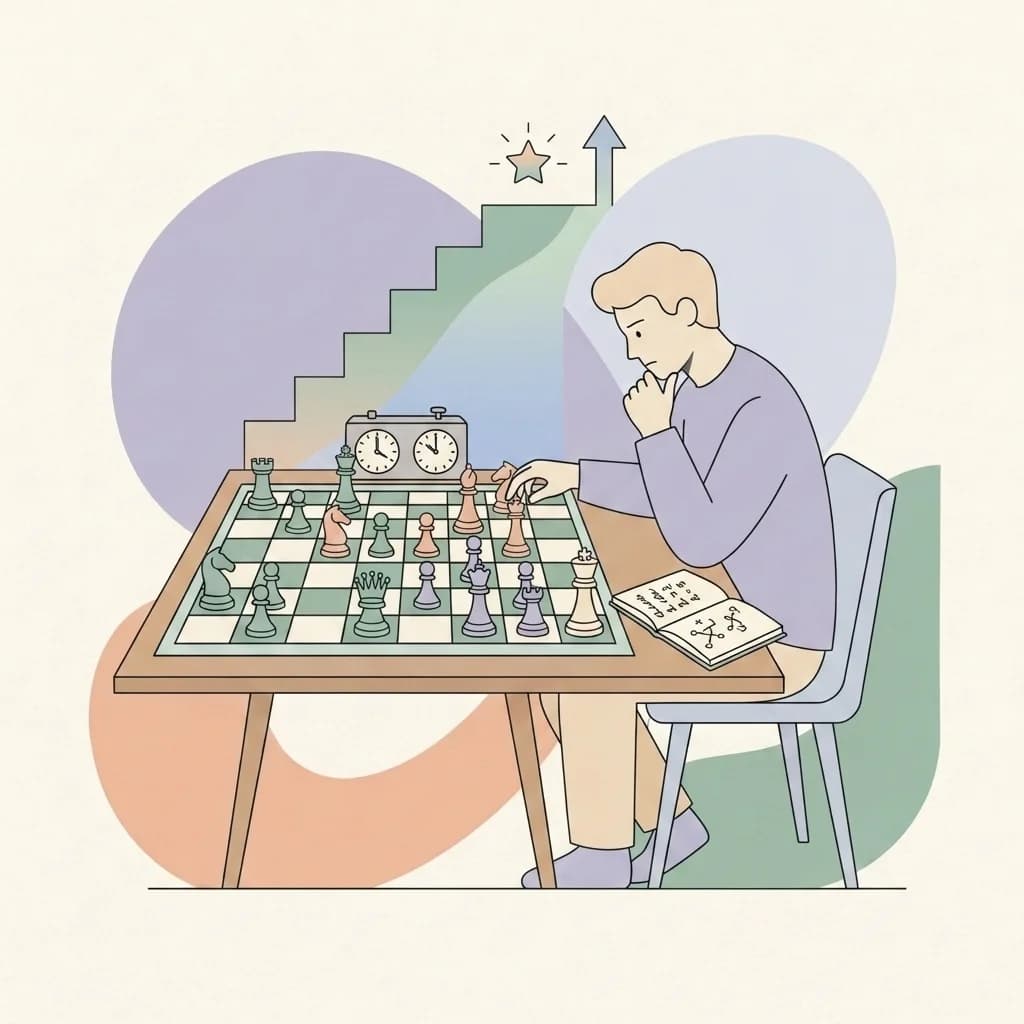
That last point matters more than it sounds. Weak calculation is often either too shallow or too long. Some players stop before the line resolves. Others keep calculating long after the verdict is obvious, because they do not trust the conclusion they already reached. Good calculation is not endless calculation ; it is efficient clarity. If you recognize yourself in either failure mode, that is the training axis to pick next.
Review your calculation mistakes properly
If you want to calculate better in chess, your post-game review has to get more specific. Labels like "I missed a tactic", "I calculated badly", or "I panicked" are too vague to help. You cannot train on a slogan.
Instead, review the moment and ask yourself what actually broke in the process. Did I pick the wrong candidate ? Did I ignore the opponent's best defensive resource ? Did I mix two branches together ? Did I stop the line too early ? Did I calculate accurately but evaluate the final position badly ? Did time pressure change my rhythm ? This is where real improvement starts. Calculation mistakes are not all the same, and classifying them properly makes your next training block much more precise. For the full review framework, how to analyze your games is the right anchor.
A simple training loop for better calculation
You do not need a complicated system to improve. You need repetition with structure.
A good weekly loop has five steps.
- solve a handful of serious positions slowly
- name candidates in writing before calculating
- classify every failed position by cause
- check if the same error shows up in your games
- revisit similar positions a few days later
This loop is more useful than grinding hundreds of rushed puzzles. Quantity helps pattern recognition, but calculation quality comes from disciplined repetition. If you want help turning this into a real training structure around your level and your goals, JD Chess coaching is where calculation work becomes much more targeted.
What to do when panic hits during a game
You will not eliminate stress entirely. The practical goal is to respond better when it shows up. When you feel yourself starting to panic in a sharp position, run a small reset : pause physically before moving, identify the opponent's threat, list two or three candidates, calculate one branch at a time, ask what the opponent's strongest reply is, then choose the move you can justify most clearly.
It is not magical. It just gives your mind a structure to fall back on. Without structure, pressure turns into noise. With structure, pressure becomes manageable.
What to remember
If you want to calculate better in chess without panicking, do not chase a mythical ability to see everything.
Build a cleaner method instead. Start with candidate moves. Calculate one branch at a time. Train visualization discipline. Stay emotionally steady in forcing positions. And when you make a calculation mistake, review it closely enough to understand what actually failed. That is how calculation becomes reliable under pressure, instead of a coin flip every time the board gets sharp.