
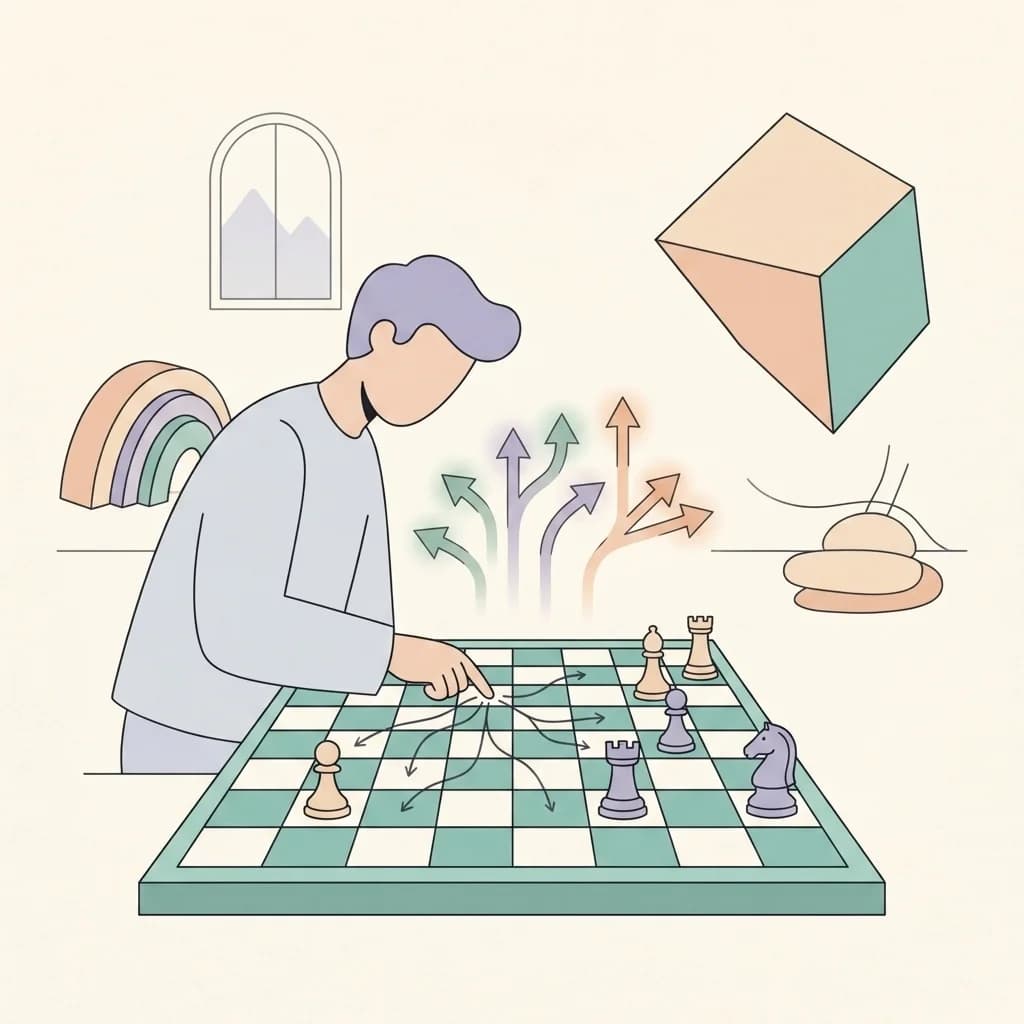
If you want to work on chess tactics seriously, the first habit to kill is guessing.
What kind of player are you really?
A lot of players think they are training tactics when they are really training impulse. They see a check, a capture, a familiar sacrifice, and play the first exciting move that flashes into their head. Sometimes it works. Often it fails. In both cases, the session reinforces a weak habit, because the move was chosen before the position was understood.
Good tactical training is not about clicking faster. It is about calculating with discipline. That means listing candidate moves, checking the opponent's best reply, recognizing patterns accurately, and reviewing the puzzles you failed instead of rushing to the next one. If your broader training still feels scattered, how to improve at chess efficiently is the right companion piece. Tactics should live inside that system, not outside it.
Why guessing weakens tactical training
Guessing gives you terrible feedback. When you guess correctly, you feel productive but you often do not know why the move worked. When you guess wrong, you learn almost nothing because the failure is not tied to a clear thinking process. Either way, your pattern recognition stays shallow and your calculation stays fragile.
That matters because tactics in real games do not announce themselves with a green arrow. You need to notice that a tactic might exist, compare more than one forcing option, calculate far enough to trust your line, and reject tempting moves that fail after the opponent's best reply. None of that shows up reliably if your practice is built on impulse. The worst part is that impulse tactics give a constant low-level illusion of progress; you feel sharper, but your games tell a different story.
Start every puzzle with candidate moves
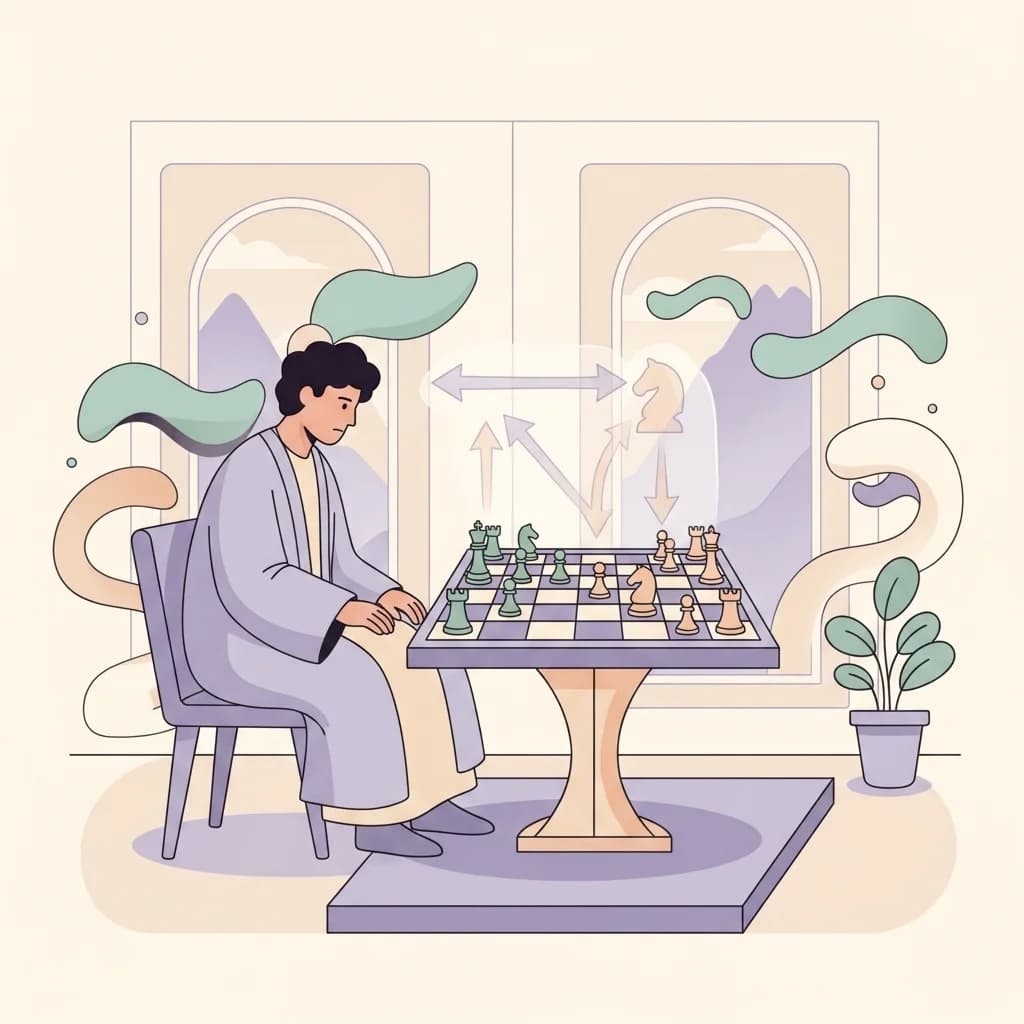
The easiest way to stop guessing is to force yourself to list candidate moves before you calculate. In most tactical positions, the first scan is simple: checks, captures, direct threats, and defensive resources if you are the side under pressure.
Do not treat the first attractive move as the answer. Treat it as one candidate among two or three. Then ask yourself three questions.
- what is the strongest forcing move here?
- is there a quieter candidate that creates a bigger threat?
- what is my opponent trying to do if I do nothing?
This small pause changes the quality of your work immediately. You stop solving by reflex and start solving by structure. For many players, the real issue is not that they cannot see tactics; it is that they stop the search too early. Candidate moves give the search a frame, and the frame is what trains the habit you want in a real game.
Calculate like you are proving the move
Once you have your candidates, calculation should feel like verification, not hope. You are no longer asking "can I make this move work somehow?". You are asking "can I prove this move works against the opponent's best defense?".
A practical order works every time : pick one candidate, calculate the opponent's most stubborn reply, continue only if the line still holds, then compare with the other candidates before deciding. This matters in tactics because many wrong answers look good for one move; they fail on move two or three. If you never train yourself to search for the opponent's best reply, you build the most dangerous habit in chess : falling in love with your own idea before testing it.
That is why tactics and game review should feed each other. If you keep missing the same kinds of shots in your own games, use how to build a chess review checklist to classify those mistakes and link them to the next block of tactical work.
Pattern recognition matters, but not on its own
Some players hear "don't guess" and overcorrect. They start solving very mechanically and ignore motifs altogether. That is not the goal either.
Pattern recognition is essential. You want to see pins, skewers, double attacks, discovered attacks, deflections, removals of the defender, back-rank ideas, and overloaded pieces. But recognition should trigger calculation, not replace it. A strong player thinks "this position looks like a deflection", then calculates carefully to confirm it. A weaker player thinks the same thing and plays the move instantly.
The difference is not motif knowledge alone. It is the discipline that follows motif recognition. So yes, work on themes, group puzzles by motif from time to time, build visual familiarity. But always close the job by calculating the line properly.
Review failed puzzles instead of collecting more
One of the biggest mistakes in tactical training is moving too fast after a failure. Players miss a puzzle, reveal the answer, nod, and click "next". It feels efficient because the session keeps moving. In reality, you are wasting the single most valuable moment of the session.
When you fail a puzzle, slow down and diagnose the cause, not just the miss.
- motif not recognized
- motif seen, but stronger candidate ignored
- opponent's best defense skipped
- calculation stopped too early
- position looked familiar, so you rushed
If you want to work on chess tactics without guessing, this review step is mandatory. "I missed it" is too vague to help. Naming the cause tells you what to train next, and it is how you stop repeating the same failure under a new skin.
Use a training format that rewards discipline
The way you solve puzzles shapes the habits you build. If every session is speed mode, you will naturally become more impulsive, because speed mode pays your brain for fast reflexes.
A better balance looks like this : slow untimed puzzles for calculation discipline, themed sessions for pattern reinforcement, short timed bursts only after the slow work, and review sessions focused only on failed attempts. For most improving players, a useful weekly shape is 15 to 20 minutes of serious untimed solving most days, 5 to 10 minutes reviewing failures, and the occasional short speed burst once the slow work is in place.
This is enough to train both recognition and rigor. It also fits inside a broader plan. If you want help organizing that plan around your level, your games, and your goals, JD Chess coaching is where tactical work becomes specific instead of generic.
Make tactical work show up in real games
Puzzle success is not the goal. Better decisions over the board are. Many players solve reasonably well but still miss tactical moments in games, because they revert to impulsive thinking under real pressure.
The bridge is awareness. After every session, ask yourself one transfer question : what thinking habit from today's puzzles should appear in my next game? Maybe it is pausing one beat before a forcing move. Maybe it is always naming two candidates in sharp positions. Maybe it is checking the opponent's defensive resource before committing. Whatever it is, you name it, and you look for it in your next serious game.
That feedback loop is what turns tactical training from a side activity into something that actually moves your rating.
What to remember
If you want to work on chess tactics without guessing, the answer is not more random puzzles. It is a better process.
Start with candidate moves. Calculate like you are proving the line. Use pattern recognition as a trigger, not a shortcut. Review your failures carefully enough to name the exact break in your process. Then watch for that same habit in your next game. That is how tactical training becomes reliable instead of streaky.