
Most of my students think they analyze their games. In practice, they open the engine, watch the evaluation bar move, nod at the blunders it flags, and move on. That's not analysis. It's passive consultation that changes nothing in their next game.
What kind of player are you really?
Useful analysis answers three specific questions: where did the game really turn, what type of mistake did you make, what should you train now. If your current process doesn't produce those three answers, you can stack engine lines for hours without moving your level.
The good news: the method isn't complex. It mostly demands steady discipline. Here's the framework I use with my students, step by step. To place it inside a bigger picture, keep how to improve at chess efficiently in mind.
If you cannot yet reconstruct a game from a scoresheet or move list, learn how to read and write chess notation first. Analysis becomes much easier once every move has a precise name.
Step 1: Replay the game without the engine
The first mistake is opening the engine right away. If you see the best moves before thinking, you lose what matters most: your actual reasoning at the moment you played. The engine gives you the correct answer, but it hides the mental path that led you to the wrong move, and that path is exactly what you need to inspect to improve.
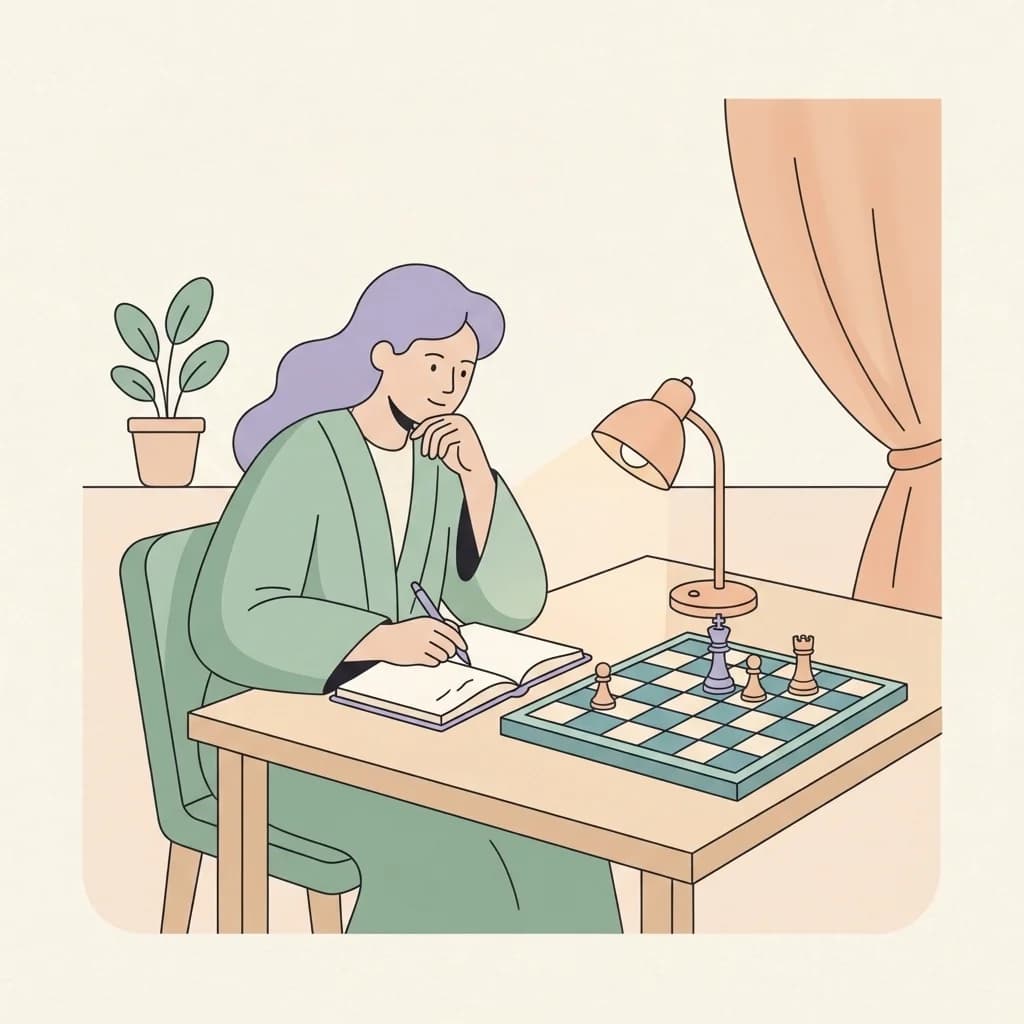
Replay the game unaided. At each important moment, stop and try to remember what you were looking for. Not "the objectively best move", but "what I thought was the best move at that moment". Note the moves where you hesitated, the moments you switched plans, the positions where you stopped knowing what to do. If you can't remember your reasoning, that's information too: it often means you played too fast or without a clear framework.
This phase takes five to ten minutes. You don't need to annotate every move. Focus on the four or five moments where you felt something was shifting in the position.
Step 2: Find the real turning point, not the last blunder
When players review, they tend to point at the first visible blunder and stop there. It's usually a bad read. The move that loses the game is often only the final consequence of a decision made much earlier.
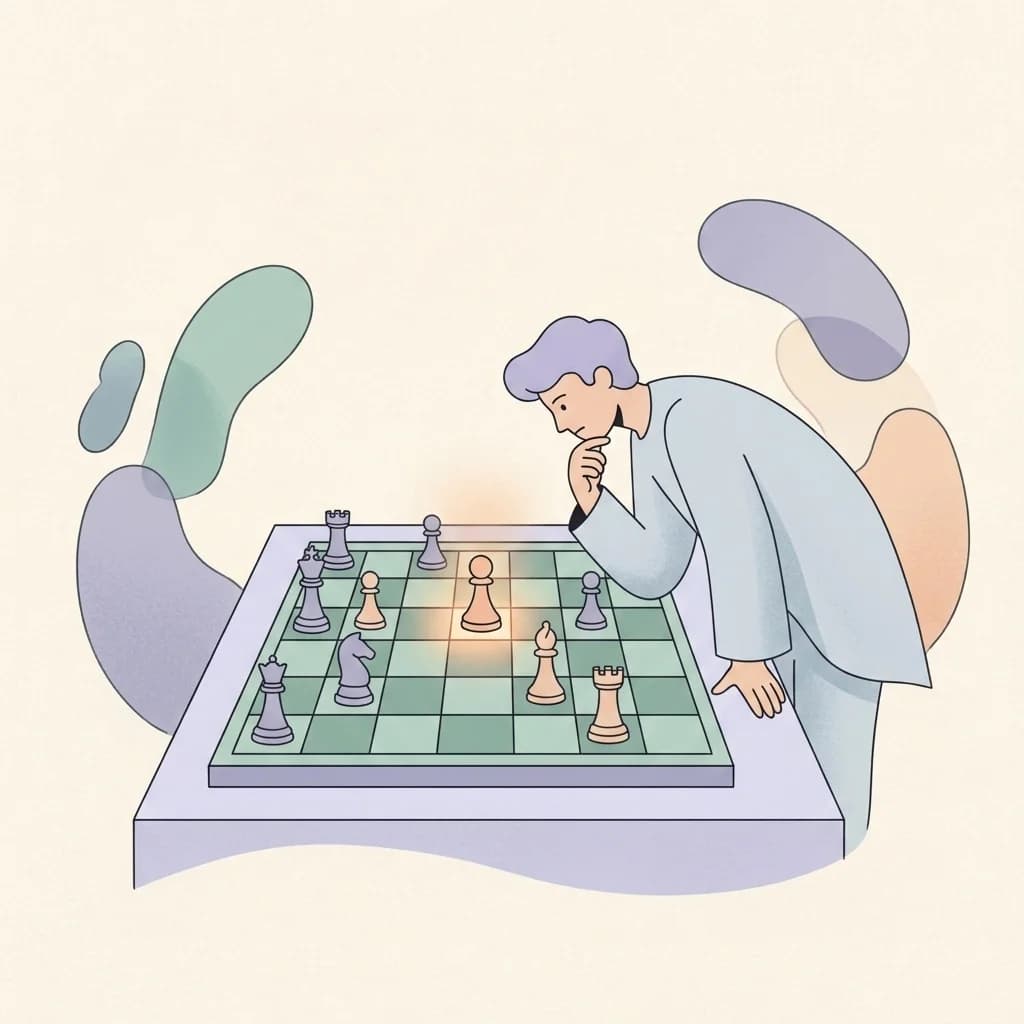
The real turning point is when the position stopped being comfortable. You didn't necessarily make a tactical blunder there. You may have let your opponent take the initiative, simplified in the wrong direction, or played an automatic move in a position that demanded patience. Ten moves later you hang a piece, but the game was already compromised long before.
To find that turning point, work backward and ask when you stopped having a clear plan, and when you stopped calculating your opponent's threats. If you find that point, your analysis changes dimension: you're no longer fixing a single move, you're fixing an upstream decision. To sharpen this specific skill, read how to find the turning point in a chess game.
Step 3: Classify the mistake into a sharp category
Highlighting a bad move isn't enough. You need to name it. Without a category, your next training scatters and rarely corrects the real weakness.
I use seven categories that cover 95% of what I see:
- tactical: missed direct threat, mating motif, piece en prise
- calculation: you saw the line but stopped it too early
- plan: you didn't know what to do in a quiet position
- time management: too much on easy phases, too little on critical ones
- opening: out of theory without understanding the resulting position
- endgame: poor conversion or defense of a technical position
- psychology: panic, rushing, urge to secure the position too early
The classification changes what comes next. If you label everything "tactical error", you grind puzzles in a loop without solving the real problem. If you identify a plan error, you understand that tactical puzzles are the wrong answer, and you switch to quiet-position work with plan formulation before each move.
Watch for false leads. You miss a simple combination: the topic might not be tactics but calculation stopped too early. You lose an equal position with no direct tactic: the problem is probably planning, not a tactical gap. The more precise your diagnosis, the more useful your next training. If you want to stop studying randomly, read how to stop studying chess randomly.
Step 4: Use the engine to verify, not to replace
The engine becomes useful only once you have your own diagnosis. At that point, its job isn't to tell you "the objectively best move", it's to answer precise questions you've formulated after thinking.
Work in a stable order. First you note your initial idea at the critical moment. Then you start the engine and look at the best line. Next you find where your reasoning diverged from the engine's. Finally you write one sentence on the cause of that divergence. If you played an active but wrong move, the problem isn't only that move. It might be the habit of playing "with energy" without checking your opponent's reply. If you lost a winning endgame, the issue might be a bad transition estimate rather than weak endgame technique. The engine should confirm or contradict your read, not replace it.
A good engine question is never "what was best?". It's "why did the position punish my idea?". For more on this step, read how to use an engine after a chess game.
Step 5: Convert the analysis into a concrete action
An analysis that changes nothing in next week's training is worthless. The quality of an analysis isn't its length or the number of noted variations. It's the clarity of the action it produces.
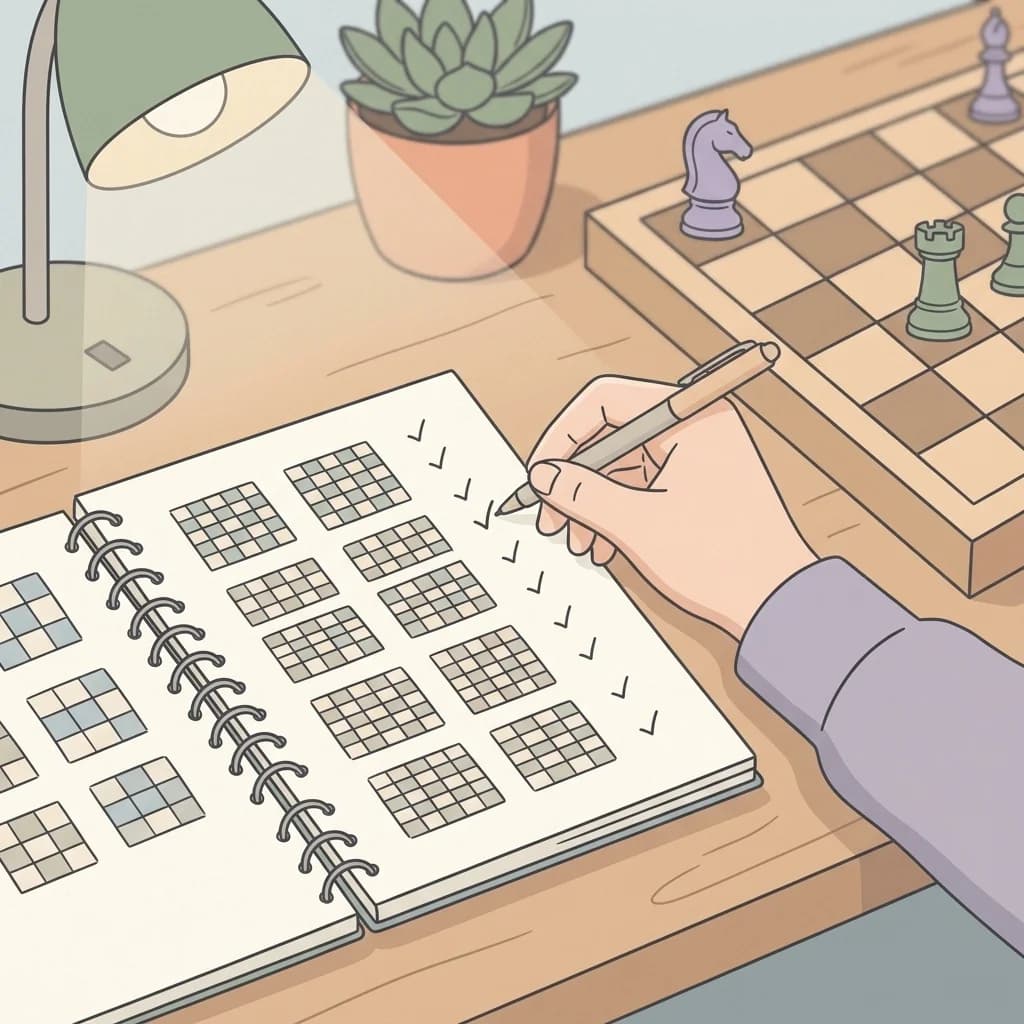
At the end of each serious game, write three lines: the main error, the associated theme, and the action for this week. That's all. A concrete example: main error, I underestimated a mating threat; theme, king safety and forcing moves; action, 15 minutes of daily calculation on positions with king attacks. Another: main error, I lost a winning rook endgame; theme, king activity and rook behind the passed pawn; action, review two model endgames and replay one concrete position against the engine.
The goal isn't to build a complex spreadsheet. The goal is to extract one sharp priority per game. That link between analysis and training is what turns study into real progress. To make this step even more operational, read how to build a chess review checklist.
Review your wins too
If you only review losses, you miss half of the useful material. A win can hide repeated mistakes, especially when you won because your opponent cracked rather than because your decision was clean.
Look in your won games for moments where you played too fast, winning positions you nearly misconverted, advantages you could have simplified more cleanly, plans that worked without your really understanding why. Those lessons slip "under the radar" if you don't hunt for them deliberately, and they often explain why you lose to stronger opponents who don't give you the gift of cracking first.
The fast format for busy weeks
You won't always have twenty minutes for a game. For busy weeks, keep a five-minute format that still does the work. You replay the game unaided to the end, mark one or two moments of doubt, identify the main turning point, note the error type, and write one training priority.
That format is enough to extract something usable from a fast game or an interesting blitz. It doesn't replace a full twenty-minute review on a long game, but it keeps the week from ending with no lesson extracted.
When analysis alone stops being enough
There comes a point where you see your mistakes clearly but can't correct them alone. You label the errors, identify the themes, note the priorities, and yet the same patterns return game after game.
That's often the sign the problem isn't technical anymore, it's structural. You need an outside view to sort what truly deserves six weeks of work from what's just an isolated incident. A coach exists precisely for that: connect analyses to each other, pick the priority that will actually shift your level, and verify the work produces a measurable effect. If that's you, read do I need a chess coach?.
What to remember
Analyzing your games effectively isn't stacking engine variations. It's going from "I lost" to "I know exactly what I'm training this week so it doesn't happen again". The hierarchy is always the same: your own view first, the engine second, a concrete action last.
If you hold that discipline across twenty consecutive games, your level starts moving visibly. Not because you found the magic method, but because you closed the loop between what you play and what you train. To extend this framework, read the three pillars of chess improvement. If you want this discipline applied to your own games with a coach who reviews them with you, JD Chess coaching is built for that.