
Most players want a better rating. Fewer players build a better system. That gap is why progress feels so frustrating for so many people. You study a little, play a lot, watch a few videos, then wonder why nothing is sticking. The problem is rarely effort. The work is just disconnected.
What kind of player are you really?
The cleanest way I teach improvement is through three pillars: you play serious games to collect evidence, you review those games to find the pattern, and you train the pattern with a specific purpose. Three things, one loop, repeated. That is the whole framework, and it works because each pillar produces what the next one needs. If one breaks, the others have nothing to feed on.
Pillar one: play games that actually tell you the truth
Improvement starts with information, and your games are the best source of it. The catch is that most games produce noise instead of signal. Premoves, half-attention, rushed decisions, blitz after blitz with no focus: none of that reveals what you would do when you actually try. If your games are noise, every downstream step falls apart, because you cannot review habits you never got to display.
This does not mean you need classical games every day. It means you need enough focus that the result reflects your decisions, not your reflexes. Three or four serious games a week (15+10 minimum, ideally one longer game) will generate more useful material than twenty blitz games spread across three nights. The goal is not volume; it is evidence you can analyze afterwards without wincing at how little you thought. A single game where you calculated, evaluated, and picked a plan will teach you more than an entire evening of bullet where your hands moved faster than your brain. Whether you log those games on Lichess or Chess.com does not matter; what matters is that you can replay them with full move history.
Before you sit down, ask yourself three quick questions. Am I playing a format that actually lets me think? Am I reaching middlegames where I have to make decisions, not just react? Am I repeating mistakes I could identify if I bothered to look? The point of the game is not only the rating at the end. It is raw material for the next pillar. Without honest games, you have nothing to review, and the whole loop stalls at step one. If you are not sure whether your current game mix is producing evidence, should you play blitz to improve at chess is worth reading before you schedule the next session.
Pillar two: review those games without making excuses
This is where most players waste the first pillar. They glance at the engine, spot a blunder, shake their head, and move on. That is not review. It is awareness without correction, and awareness alone has never moved a rating. The mistake you "already knew about" last week will return next week because nothing actually changed in how you think.
A useful review does three things. It identifies the exact moment the game turned, which is almost never the move the engine flags hardest. It explains why the decision was hard at that moment, not just why the move was wrong in hindsight. It names the pattern clearly enough that the next training block can target it. Those three steps turn a game into a lesson. Skip any of them and the review resets to zero the moment you close the window.
The honest version of this process feels uncomfortable because it forces you to confront how you were actually thinking at the critical moment, not how you wish you had been thinking. You were not "just distracted". You did not see the candidate move. You did not evaluate the trade correctly. You trusted a shallow calculation. Those are the real findings, and they only surface when you replay the position without the engine first and write down your own explanation before checking. Cognitive research on deliberate practice (summarized across studies indexed on PubMed) keeps pointing to the same conclusion: retrieval before feedback is what builds durable skill. How to analyze your games walks through the exact sequence.
What you are looking for across reviews is not a list of single mistakes. It is the recurring cause. Maybe you consistently miss simple tactical shots under time pressure. Maybe you lose the thread in quiet positions because you are waiting for a clear plan to appear instead of creating one. Maybe your endgames collapse because you do not know a handful of standard techniques. One recurring cause identified across three games is worth more than thirty disconnected mistakes logged across thirty games. The point is to name the pattern so the third pillar has something specific to attack.
Pillar three: train the pattern, not the whole game
Once you know what is actually breaking, training becomes simple. Instead of trying to study everything at once, you pick the biggest leak and work on it. That is what makes this pillar efficient. You stop guessing what to study next because your own games already told you.
For most players, the right training mix at any given time fits in three slots: one tactical or calculation priority, one strategic or positional priority, one practical endgame or conversion priority. That is the full training cycle. You do not need twelve open tabs and a heroic plan you abandon by Friday. You need three narrow priorities, each tied to something your reviews flagged, each worked on for enough weeks to install. A spaced-repetition trainer such as Chess Tempo is useful here precisely because it forces you to revisit the same theme until it sticks, instead of swapping puzzles every session.
Alignment is what makes this work. If your games show that you lose on time in equal positions, opening memorization is not the priority; your thinking process and time management are. If you win material but cannot convert, endgame technique matters more than a new opening line. If your plans are vague in middlegames, study strategic imbalances and model games rather than piling on tactics you already solve correctly. Training that answers the problems your games are actually asking will produce visible results in weeks. Training that ignores those problems can continue for months without moving anything except your sense that chess is unfair.
Most players do not fail this pillar because they are lazy. They fail it because they train what they like instead of what they need. Tactics puzzles are fun; slow endgame study is not. Opening lines feel like progress; reviewing your own bad moves feels like admitting fault. The players who actually improve are the ones who let their reviews pick the training target, even when the target is the least interesting thing on the list. How to improve at chess efficiently is the broader version of this argument.
How the three pillars feed each other
The pillars are not separate projects. They only work in sequence, because each one produces what the next one consumes. You play games to create evidence. You review them to extract the pattern. You train the pattern to change what happens in the next game. Then the cycle restarts, with the next game producing new evidence that either confirms the fix held or surfaces the next priority.
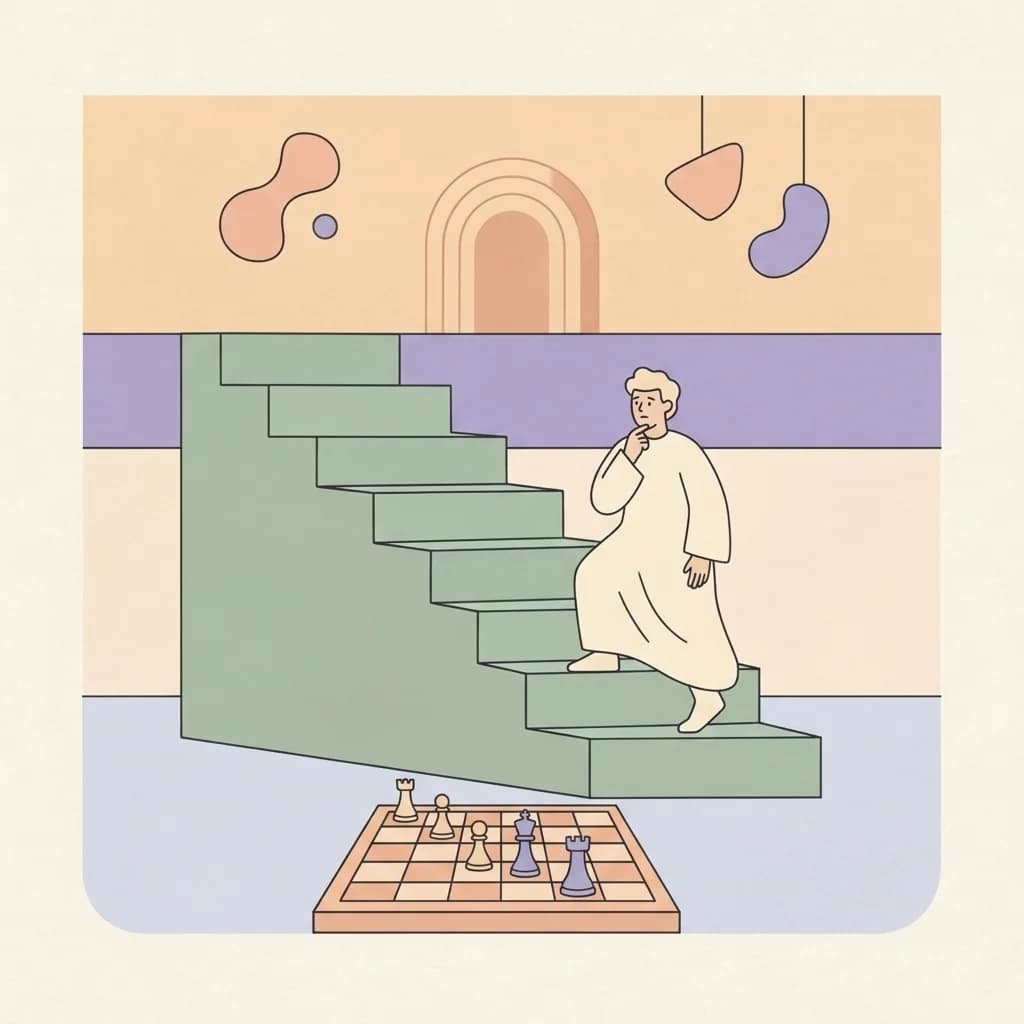
That is what makes improvement compound. A pattern trained and tested is more deeply installed than a pattern merely studied, because you saw it succeed under clock pressure in a real game. Random study feels busy but produces limited return precisely because it has no feedback loop. You read something, you do not test it in a game, you read something else. No single idea ever gets verified or reinforced in the conditions that actually matter.
If you want a simple weekly structure, it looks like this: play a small number of focused games, review them the same day or the next day, choose one training theme based on what you found, test that theme in the following games, then review again to see whether it stuck. That cycle is small enough to sustain for months and strong enough to actually move a rating. It is not glamorous. It is also the closest thing to a universal recipe that exists at club level.
What breaks the system in practice
The most common failure mode is imbalance. Players spend heavily on one pillar and almost nothing on the others. Too much playing without review gives you experience without correction, and the same mistake cycles for a year. Too much studying without playing gives you ideas without application, and you feel knowledgeable while losing the same way you always lost. Too much analysis without action is the worst of the three, because you diagnose the problem perfectly and keep playing without doing anything about it.
The fix is rarely "more discipline" in the abstract. It is a better ratio of work across the three pillars. When a student is stuck, the right question is not "what should I study next?" but "which pillar is the one I have been neglecting?". Nine times out of ten, the neglected pillar is review. It is the least entertaining and the most uncomfortable, and it is also the one that determines whether the other two pillars produce anything. How to review a lost chess game is the specific breakdown for the pillar most players skip.
The second failure mode is moving between themes too quickly. A weakness needs several weeks on the same axis before it corrects. If you switch priorities every Tuesday because a new video surfaced or a different loss felt more painful, you interrupt the learning before it produces anything. You are not working on nothing; you are working on five things for three days each, which is functionally the same as working on nothing at all. How to stop studying chess randomly is the dedicated breakdown for this trap.
A practical approach
The approach I use with students is built around clarity, not volume. The games you play should expose real weaknesses. The review should isolate the pattern with honesty. The study plan should fix that pattern with purpose. When those three things line up, improvement stops being emotional ("why isn't this working?") and becomes measurable ("the pattern I named six weeks ago no longer shows up in my games, which means I can move to the next priority").
Most players do not need more hours on chess. They need the hours they already put in to be better connected. Three hours a week spread across the three pillars with a clear target beats eight hours of random activity, and it is the mix most club-level players can actually sustain alongside the rest of their life. If your federation rating sits below the FIDE threshold and you are still climbing online, the same loop applies; the only thing that changes later is the format mix. If you want a fuller weekly template, chess training routine puts numbers around each pillar. And if you want a map of where the same loop eventually leads, how to reach 2000 Elo in chess covers the technical skills that decide the upper plateau.
Key takeaways
- Three pillars, one loop: play serious games, review them honestly, train the pattern that keeps breaking.
- Each pillar produces what the next one consumes; neglect one and the whole system stalls.
- Review is the pillar most players skip, and it is the one that decides whether the other two pay off.
- Pick one priority per slot (tactics, strategy, endgame), hold it for several weeks, then re-test it in real games.
- Three connected hours a week beats eight random hours; cadence wins over volume at club level.
When you are ready to turn the framework into a plan that fits your specific level and schedule, JD Chess coaching is where I help students install the loop properly. If you are still weighing whether outside help is the right call right now, do I need a chess coach? walks through the decision honestly. The goal is not lifelong outside help; it is getting the three pillars connected cleanly enough that you can drive them yourself.