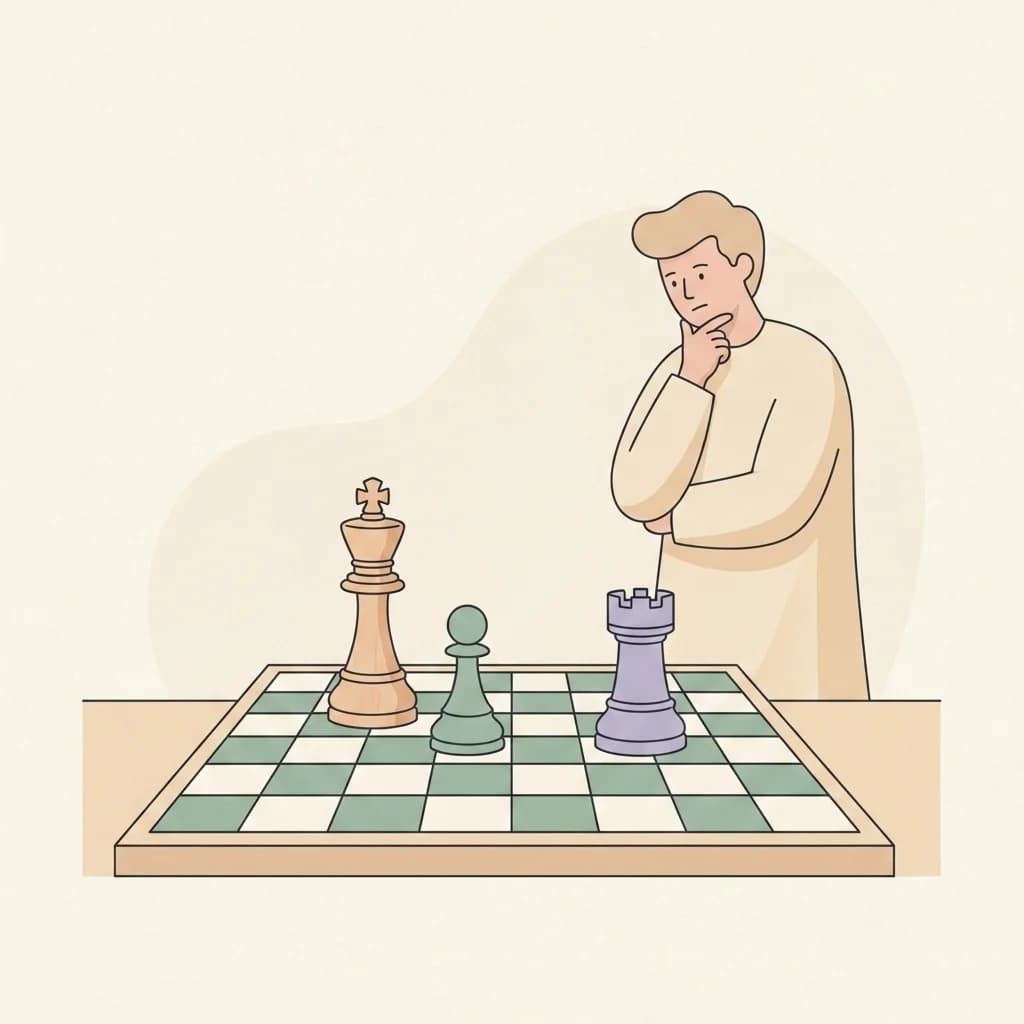

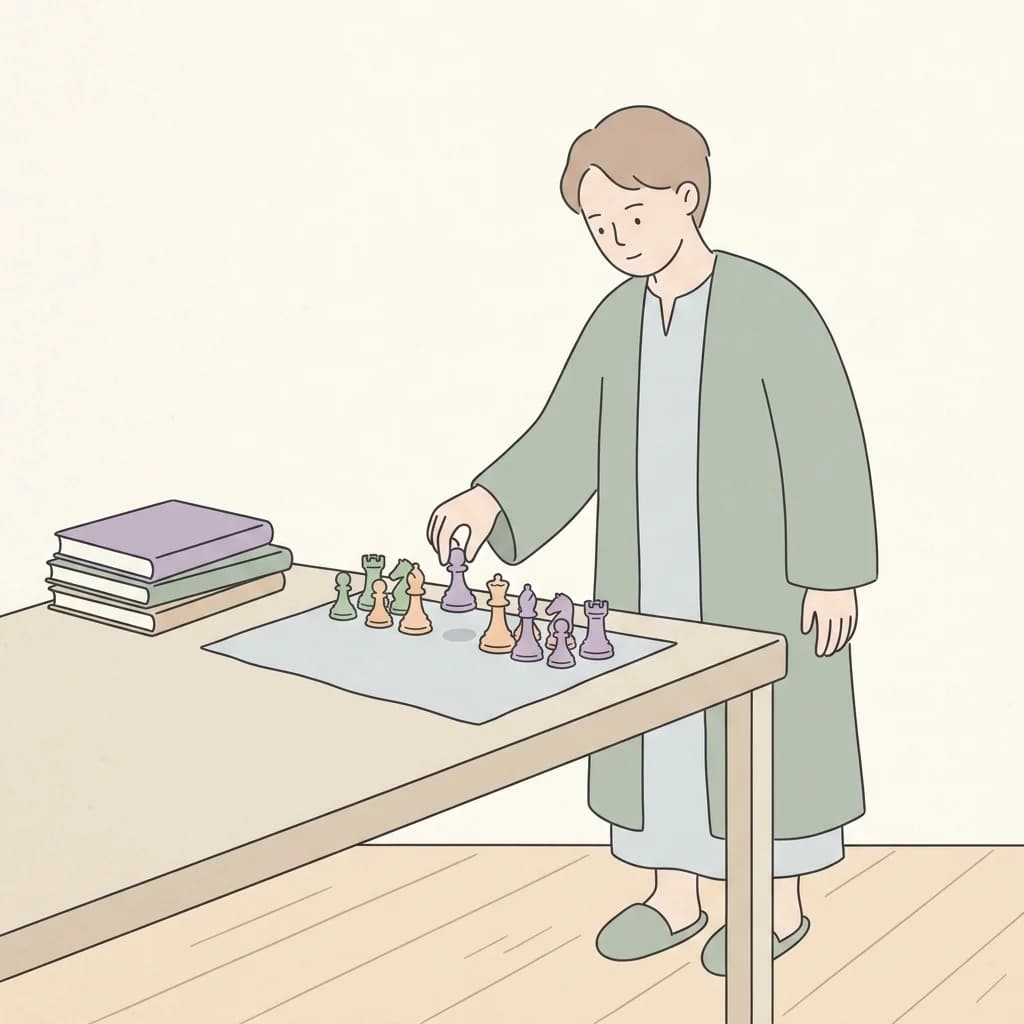
Studying openings is not about stacking variations until you collapse. Most players I see in lessons are working their openings the wrong way. They copy a line from a video, memorize ten moves, then freeze the moment the opponent leaves the script. The problem is not memory. The problem is that they never understood what they were trying to learn.
Which format grows your game fastest?
A useful opening gives you three things: positions you can read, middlegame plans you recognize, and a stable base that removes repeat mistakes. If your study gives you a move sequence without any of those three, it is wasting your time. For the broader frame, pair this with how to improve at chess efficiently. Here we focus on one question: how to study chess openings without overload.
The real goal of opening work
The goal of an opening is not to "know the theory". The real goal is simpler. Reach a playable position you understand, that fits your style and your level. If you come out of the opening with a middlegame you cannot read, it does not matter that the first fifteen moves were objectively correct. You are still on your way to losing.
Good opening work should answer a few concrete questions: where do my pieces naturally belong, which pawn structure will appear most often, what are the typical plans for both sides, and at what point do I need to stop reciting and actually play chess? Once you can answer those, you stop collecting lines. You start building a small system of stable reference points.
Why raw memorization fails
Brute memorization has three problems. It is fragile: the moment an opponent swaps two move orders, your bearings collapse. It creates an illusion of work: you spend an hour on a variation with nothing transferring to your games. And memory alone never tells you what to do when the position changes, which it always does.
If you do not understand the strong squares, the timing of a central break, or the weakness you are targeting, the opening just deposits you into a middlegame you cannot read any better than before. That is why opening study must stay tied to plans and structures, not to moves alone.
Start by cutting the repertoire down
The first healthy reflex is subtraction. You do not need five answers against 1.e4, three systems against 1.d4, and two surprise weapons. You need a simple, repeatable repertoire, stable enough to produce the same structures over and over. The wider the repertoire, the less you actually know each line when it hits the board.
For most players under 1800, this minimal frame is enough:
- one main first move with White
- one clear answer to 1.e4
- one clear answer to 1.d4
- a simple backup against rare systems
The more you replay the same families of positions, the more you learn what matters. The more you understand, the less you need to memorize mechanically. That virtuous loop is the difference between a player who improves in the opening and a player who revises forever.
Pawn structure first
If you want to learn an opening, start with what lasts the longest in the position: the pawn structure. Exact moves change with the opponent, but the structure decides where your pieces belong, which breaks matter, which trades favor you, and what the plan should look like for each side.
If you play an isolated-pawn structure, you need to know when to press actively and when to simplify. If you play a closed structure, you need to know where the break is prepared. If you let the opponent keep the bishop pair, you need to know what kind of position to aim for instead. The right question is never "what is the best move here" in the abstract. It is "what middlegame does this opening lead to, and do I know how to play it".
One note per line, not an encyclopedia
A good opening note does not look like a page of moves. It looks like a very short mental map. For every important line, write down only what is essential: the main plan for White, the main plan for Black, the key strategic break, and the typical mistake to avoid. Nothing else at first.
You can add concrete sequences, but only where they really matter: a trap to avoid, a frequent tactical idea, a critical move order, a known transition into a sharp middlegame. The rest should stay short. A note that grows long is a note you will never reread.
Model games beat infinite databases
To study an opening without overload, model games are far more useful than a saturated database. A full game shows you the meaning of the opening, not just its first moves. You see how the position was played afterward, which piece was improved first, which break changed everything, and what endgame appeared.
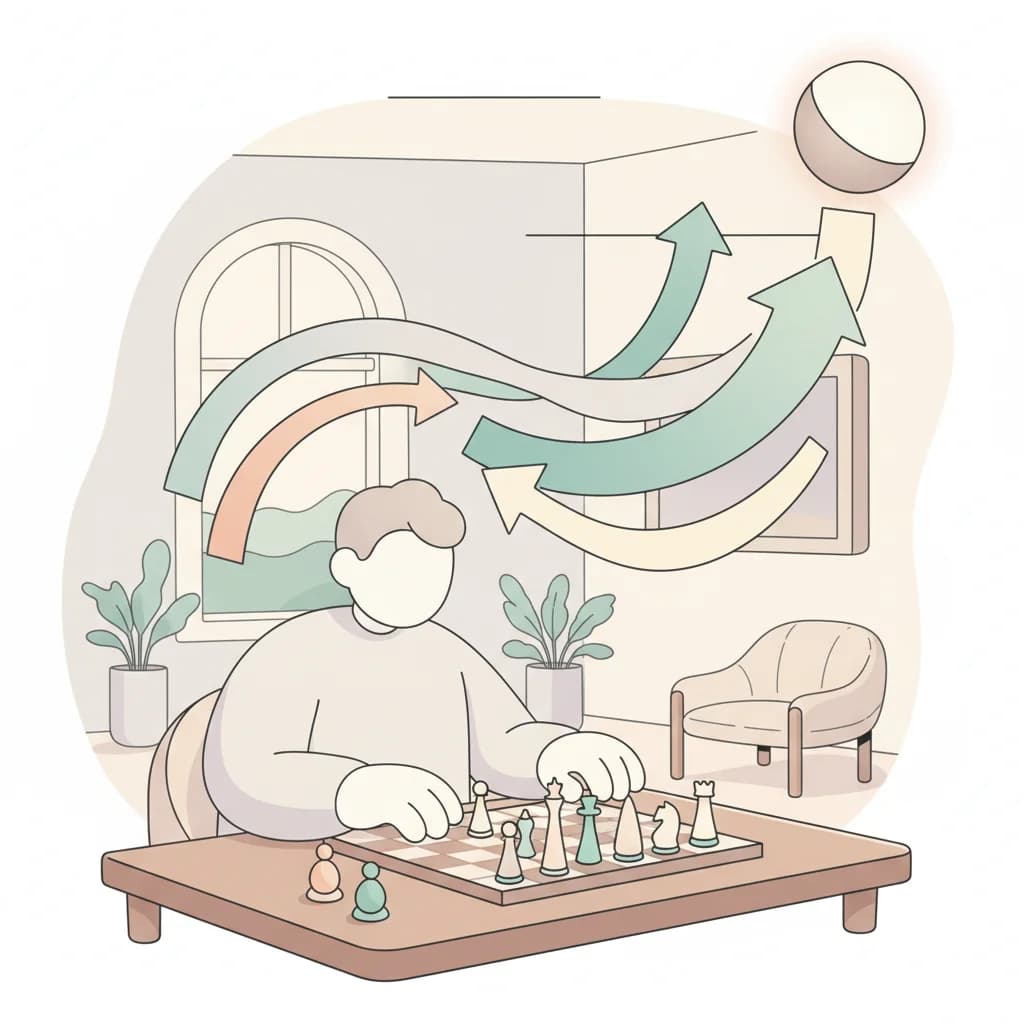
Three to five well-understood games are worth more than an ocean of lines you never digested. Study your model games by noting what matters: development, the moment theory stops, the squares that become critical. You do not need fifty examples. You need examples you can replay from memory a week later.
Your own games are the best material
The highest-return opening work does not start in a database. It starts in your games. After every serious game, ask yourself whether you left the opening with a position you understood, whether you wasted time on automatic moves, whether you forgot a simple idea or standard plan, whether you repeated a mistake you had already seen before.
Then go back to that exact position and build your training around it. If you do not yet know how to extract that kind of information from your games, go through how to analyze your games first. That is where opening study becomes intelligent: when it starts from your real mistakes instead of abstract curiosity.
Engine after your own reading, never before
The engine is useful, but it becomes toxic when you use it too early. If you open the automatic analysis straight away, you risk copying moves without understanding why they are strong. You see the evaluation, you see a better line, and you move on without learning anything about the ideas.
The right order is simple: replay the game without the engine first, find the moment you lost the thread, state what you thought you understood about the position, and look for a better plan on your own. Only then switch the engine on to check. It should confirm or correct your reasoning, not replace it. Otherwise you just collect correct moves you could not reproduce in any other game.
What actually deserves memorization
You do still need to memorize some things. The question is not "should I memorize", it is "memorize what". Useful anchors are concrete: the first few moves of a main line, the move orders that avoid a specific problem, transitions into a structure you want to reach. Those deserve to be locked in. Avoid memorizing long variations that almost never appear, lines you do not understand strategically, and theoretical novelties with no impact at your level. The rule is simple: memorization should serve understanding, not replace it.
Signals that your opening work is paying off
You do not need months to know whether your opening work is helping. You reach the middlegame with a plan more often, you spend less time on the first moves, you recognize the structures that repeat, you can explain in your own words what you are looking for. If instead you are still surprised by every deviation, your study is staying too theoretical. For the broader version of that issue, also read how to stop studying chess randomly.
What turns your repertoire into a real base
Studying openings without overload means accepting one simple idea: what makes you improve is not the volume of lines retained, it is the quality of the reference points you build. Train fewer systems, understand the structures, watch a few model games, return to your own mistakes, memorize only what serves your play. That logic turns the opening into a solid base instead of an extra mental tax. If you want to bring order into your repertoire, have a look at JD Chess coaching.