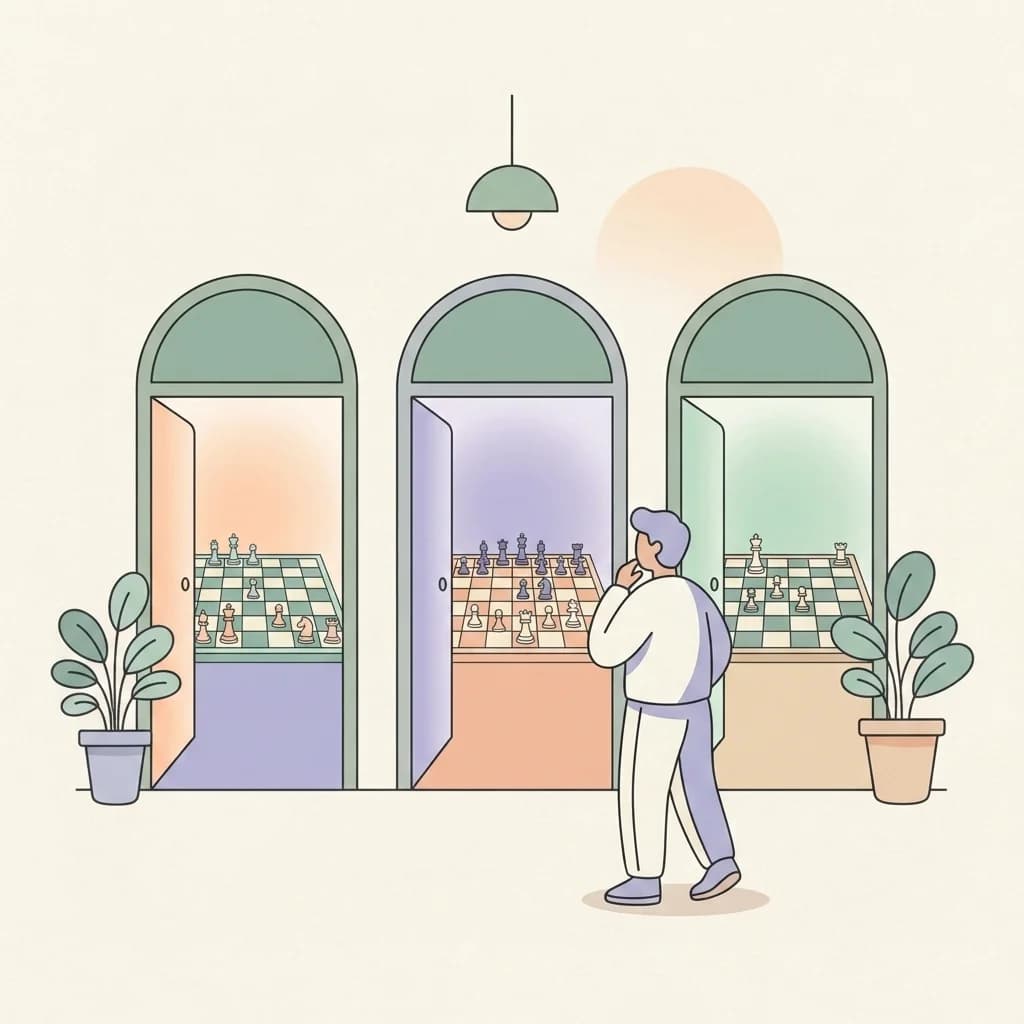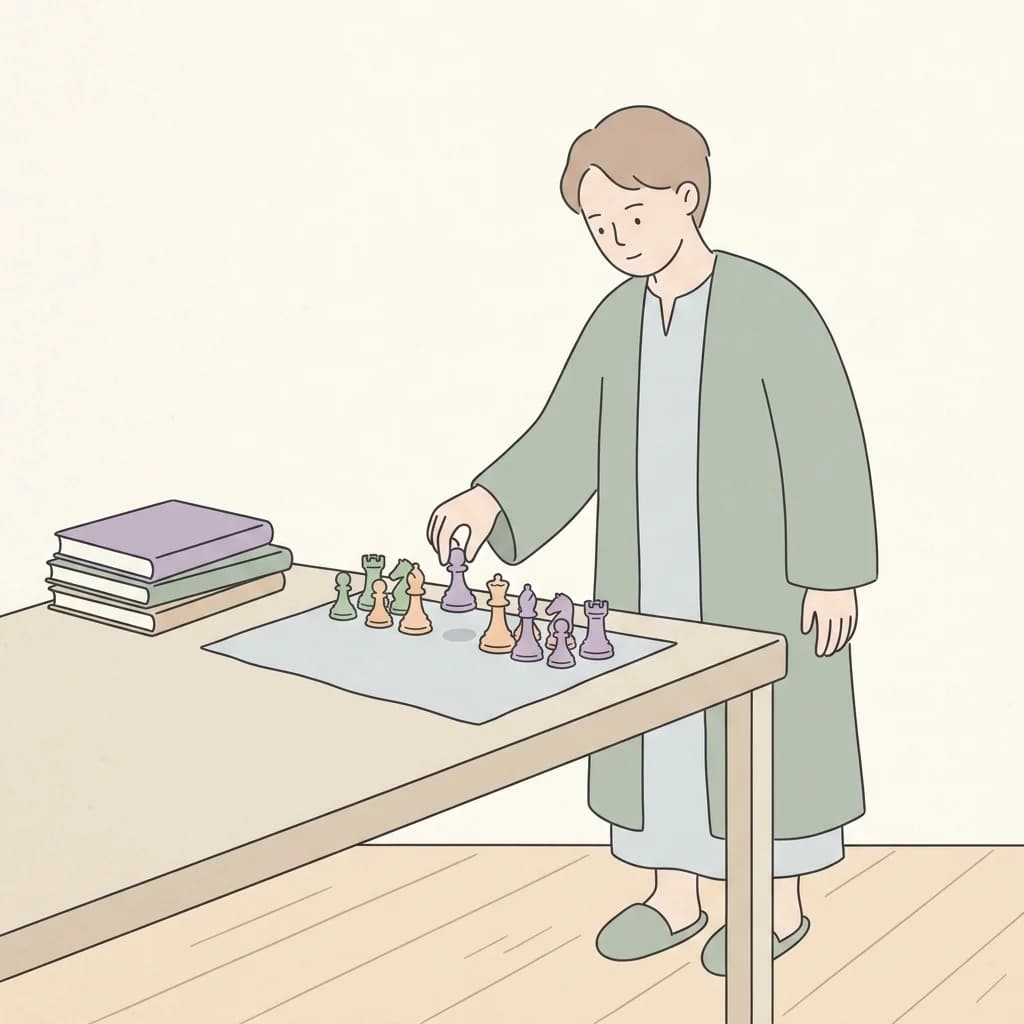

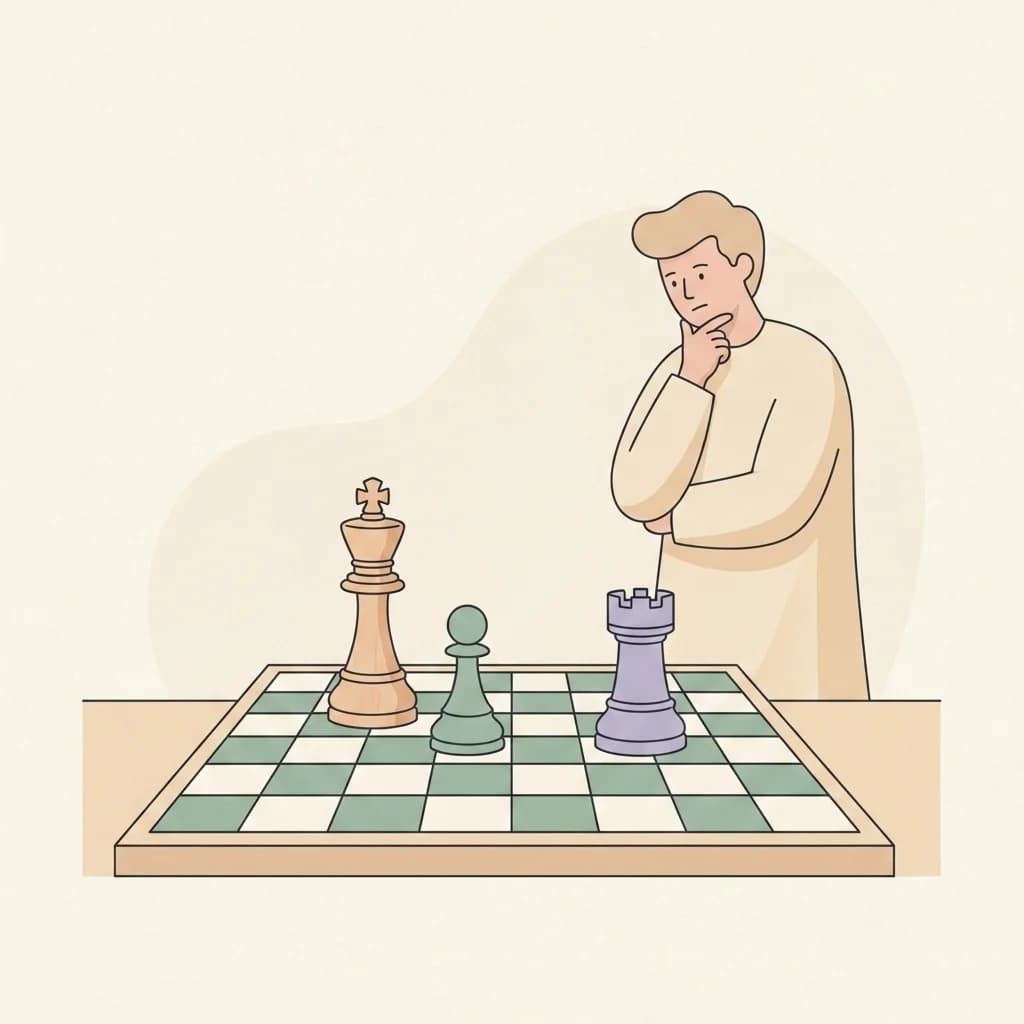
Most players treat the chess endgame like a separate subject that starts once the real game is over. That frame is wrong, and it is why the chess endgame feels foreign for years. The endgame is the same game with fewer pieces, clearer plans, and less room to hide mistakes. Every tempo, every king move, every pawn matters more.
How do you actually train chess?
If you want the endgame to feel simpler, stop memorizing dozens of technical positions. Start with a small set of principles that tell you what to do when the pieces come off, and connect them to your own games. For structured practice, an endgame study on Lichess or the curated endgame lessons on Chess.com cover most of what a club player needs.
What actually changes in the chess endgame
The endgame changes the value of almost everything. A small mistake the middlegame could absorb through activity or tactics now sticks, because the cushions are gone. An active king can dominate a board, a passed pawn can reshape the position, and one bad rook placement decides the result. That is why endgames feel unforgiving : they are not random, they are simply less forgiving.
The practical response is to narrow your focus. Instead of asking what theory you need to memorize, ask which king should be more active, which pawns matter most, which pieces should stay on the board, and whether simplification helps you or your opponent. Those questions solve more games than theory density ever will.
Start with the king
If you remember one endgame rule, make it this : the king is a fighting piece in the endgame. In the middlegame, it hides. In the endgame, it often becomes one of your strongest pieces, helping you win pawns, support passers, control key squares, and stop the opponent's passers.
Passive king play loses endgames by default. If yours stays far from the action, your opponent's king gets there first and the position slowly slips. Two rules cover most situations : when the board is open and queens are gone, activate your king early ; when you are behind, use your king to create counterplay instead of waiting. If in doubt, bring your king toward the center. It is almost always the most useful improvement move you have.
Pawn structure decides more than you think
Pawn structure becomes decisive in the endgame because there are fewer pieces to cover weaknesses. What matters is not to label the features abstractly, but to ask what they allow. A passed pawn is a long-term threat if you can support it. A majority on one wing can create a passer. A weak pawn becomes a target once the pieces thin out. A fixed structure makes king activity more important than piece activity. Most endgames are decided by one simple chain : improve the king, create a passed pawn, convert with accuracy. Keep that sequence in mind and you already play better than most of your opponents at club level.
Simplify with a reason
"Simplify" does not mean "trade whenever you can." That is the most common mistake in conversion. Simplification is only useful when it improves your position. Before exchanging, ask three questions : does this trade make my king more active, does it improve my pawn structure, does it bring me closer to a favorable endgame? If the answer is no to all three, the trade helps your opponent. You welcome exchanges with the better king, better structure, outside passer, or more active rook ; you avoid them when defending a worse structure or relying on piece activity. Simplification is a tool, not a habit.
Rook endgames are where the points live
Rook endgames appear constantly because rooks are often the last major pieces left. They look simple, and that is the trap ; the practical requirements are strict, and players lose points here they would never lose in the middlegame. If you want one solid reference shelf for this phase, the endgame catalogue at New In Chess (Mueller's series in particular) is the standard.
Three ideas carry most of the work. Activate the rook : an active rook almost always beats a passive one tied to a pawn, so aim for open files, the seventh rank, or squares behind a passer. Support passed pawns from behind, where the rook supports the advance and keeps the file. Watch king safety : rook endings are often decided by perpetual checks, so an exposed king can cancel an extra pawn. When a rook ending feels messy, reduce it to four questions : is my rook active, is my king active, do I have a passer, can my opponent check forever? The plan usually shows up.
Pawn endgames are about opposition and activity
When only kings and pawns remain, the game gets very concrete. The two ideas that matter most are king activity and opposition. Opposition means one king controls the key squares in front of the other, and it often decides whether a pawn promotes or a king penetrates. This is the grammar behind everything else, and how to build a chess review checklist can help you track when opposition mistakes cost you points.
You do not need dozens of rules here, just three habits : move your king toward the action, count pawn races carefully, identify whether the opposition helps you. In pawn endgames, one tempo decides the result, which is why careless move order is so expensive. Ten minutes a day on clean examples beats a marathon session you forget next week. Drilling on Chesstempo endgame trainer is one of the cleanest ways to log those reps, and the cognitive load research summarized on PubMed confirms that short, focused sessions retain better than marathons.
Convert and defend in the right order
If you are winning, your job is not to win immediately. It is to convert in the right sequence, because most won endgames are lost by rushing. A reliable order : activate the king, improve the worst piece, create or support a passer, restrict counterplay, then force the breakthrough. Patience in conversion is what distinguishes strong chess endgame players from the rest.
Defense works by the same logic in reverse. When you are worse, passive defense usually loses ; the goal is to create practical problems through an active king, pawn targets, your own passer, active rooks, or perpetual ideas. Even a slightly worse endgame can be held if every move forces your opponent to solve something real. How to analyze your games shows how to turn your own endgame errors into targeted training. If you play rated chess, the FIDE handbook is also worth knowing for the 50-move and insufficient-material rules that quietly decide a lot of endings.
The practical endgame checklist
Before making a move in any endgame, run through this short list:
- Is my king active enough?
- Which pawn is the real target?
- Is my rook active or passive?
- Can I create a passed pawn?
- Can my opponent create counterplay?
- Am I simplifying into something better or worse?
Most club players do not lose endgames because they missed an exotic line. They lose because they skip these six questions under pressure.
For a concrete first technique, practise king and rook checkmate. The four model positions show how king activity and a safe rook work together when no pawns remain.
The final rule
Endgames are not about memorizing everything. They are about applying a few stable rules with discipline : activate the king, keep the rook active, value passed pawns correctly, simplify with purpose, defend by creating counterplay. Once you know what to look for, the phase stops feeling mysterious and starts feeling manageable.
Key takeaways
- The king is a fighting piece once queens come off ; activate it early, not as an afterthought.
- Most won endgames follow the same chain : better king, passed pawn, accurate conversion.
- Simplify only when the trade improves king, structure, or piece activity ; never as a reflex.
- In rook endgames, an active rook on the seventh or behind a passer beats material more often than people admit.
- Short, focused endgame drills (ten minutes a day) outperform long sessions you forget by next week.
If you want to fit this into a broader improvement system, the three pillars of chess improvement shows where endgame work sits, and how to improve at chess efficiently helps you turn repeated endgame mistakes into a real training block. If you want a structured path with diagnosis, plan, and follow-up, JD Chess coaching is built exactly for that kind of work.