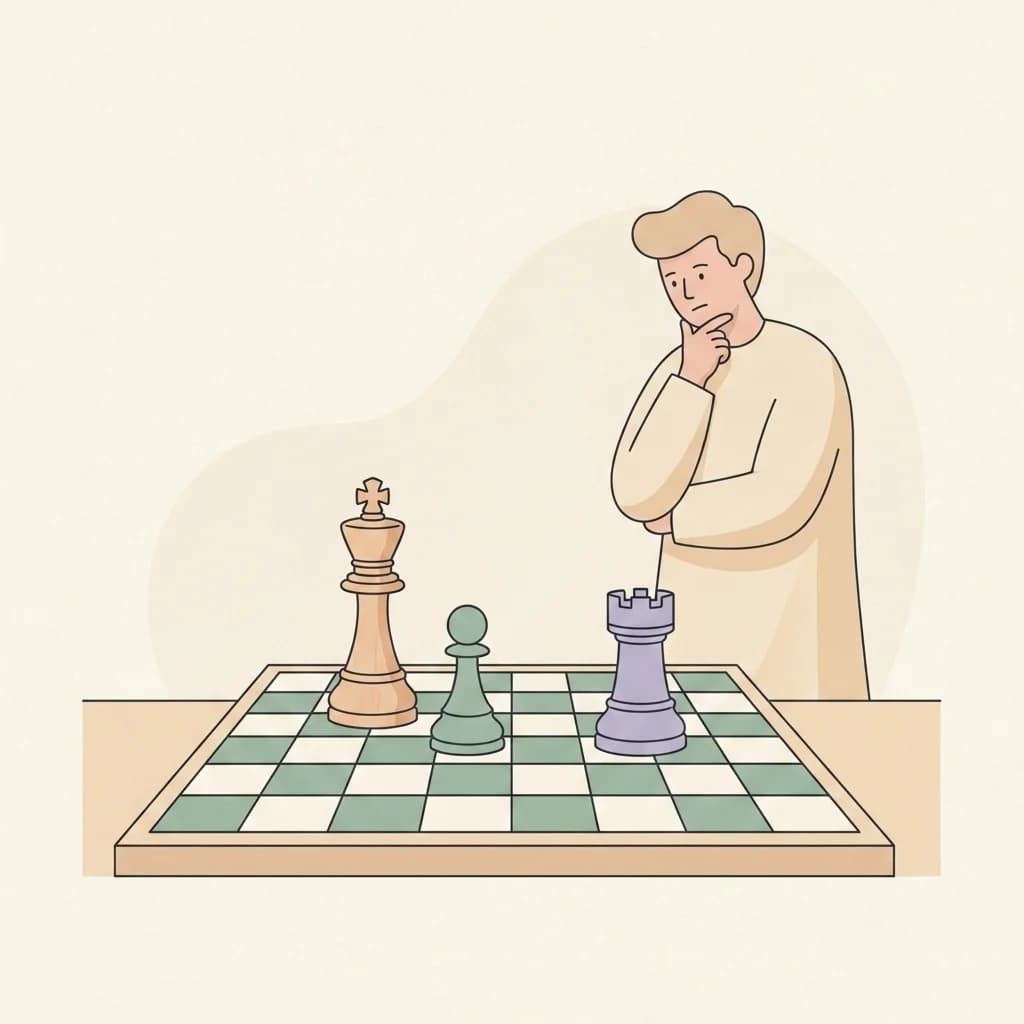

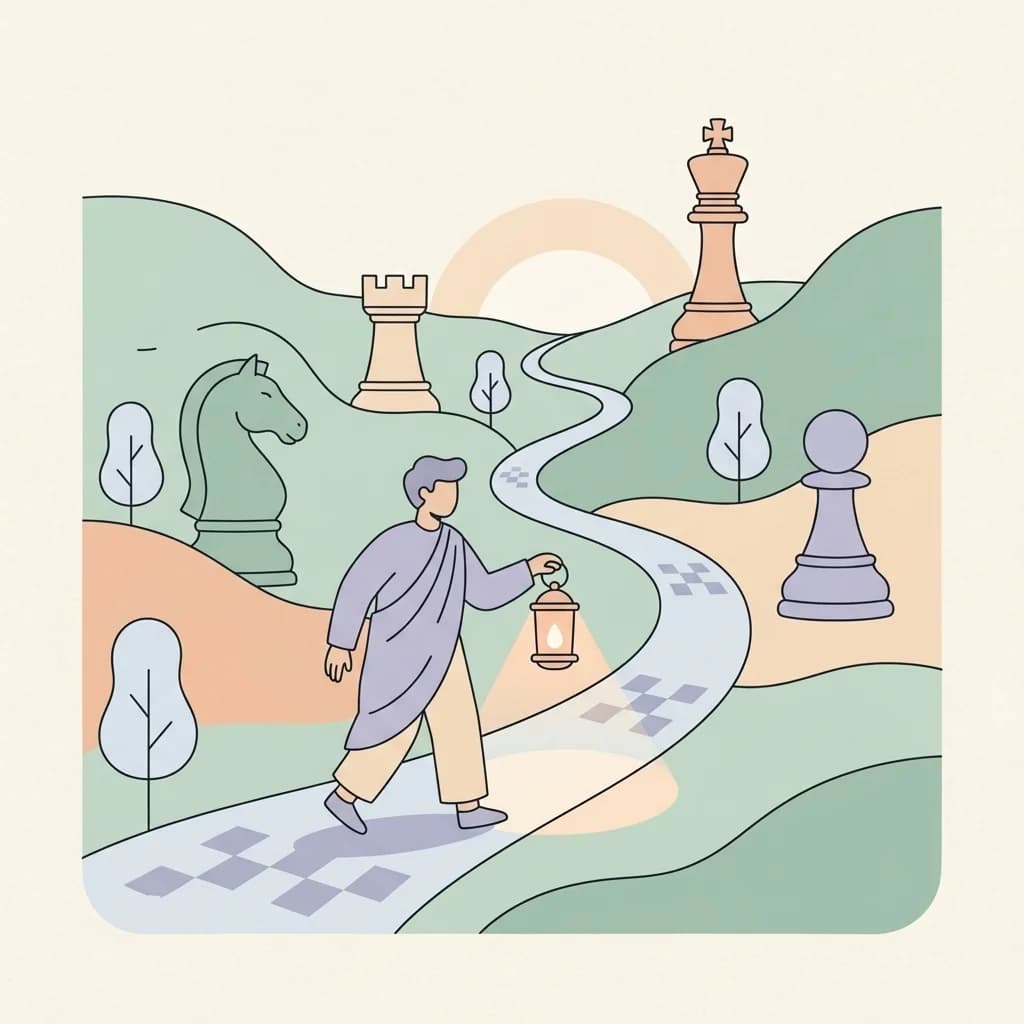
Most students I coach show up with the same line about endgames: "I know I should work on this, but I have no idea where to start." They open a book, look at two technical positions, grab a fuzzy motif, move on. A week later, nothing is left.
Which format grows your game fastest?
The problem is not that endgames are too complex. The problem is that you treat them like an encyclopedia to absorb, when they are really a small set of recurring situations you need to internalize slowly. What actually works is a tight core, a few model positions, and a direct link to the games you play. That is the same logic behind how to improve at chess efficiently: less scattering, clearer priorities.
Why endgames feel like a black hole
Endgames look intimidating because they seem infinite: pawn endings, rook endings, opposite-colored bishops, technical conversion positions, precise defensive resources you are supposed to "know." You conclude you have to master everything before you can play them with confidence.
That is not how progress actually happens. You do not need to have absorbed the equivalent of a manual. You need to recognize a handful of position families, understand their key ideas, and bump into them repeatedly in your own games. The goal is not to become a database. The goal is to be clearer, steadier and more precise in the endgames you actually reach. As long as you confuse the two, you read without learning.
Do not study endgames at random
The worst plan is to open a chapter at random and hope it pays off someday. It feels serious, but the transfer to practical play is close to zero. You can spend an hour on a rare theoretical position and keep losing trivial pawn endings and basic conversions every week.
Before you commit time to an endgame, you should be able to answer three questions: does this family show up in my games, do I keep losing the same transition, does this position teach me an idea I can reuse elsewhere? If the answer is no to all three, this is not your priority today. Real progress follows a funnel: foundational endgames first, then the ones frequent at your level, then technical endings based on your repertoire. For the broader anti-scattering framework, read how to stop studying chess randomly first.
The core that covers 80% of your endgames
For most players below 2000, a very small core is enough to transform endgame quality. Start with king and pawn endings: opposition, key squares, passed pawns, pawn races, king activity. These themes show up inside almost every other endgame. Get them wrong, and the rest stays foggy.
Move on to king plus pawn versus king. It looks elementary, but it is the grammar of everything else. You learn when your king is advanced enough, when opposition wins, when promotion goes through, when the position is drawn despite the extra pawn. Only after that, tackle simple rook endings, because they come up constantly in practice.
Inside the rook block, hold on to a few key ideas: rook activity beats everything else, the rook belongs behind the passed pawn, the king must enter rather than watch, and active defense beats passive defense almost every time. Stay light on minor pieces early on; good knight versus bad bishop, weak squares, and pawns on the bishop's color are plenty to start. You are not chasing exceptions, you are installing solid reflexes.
Learn ideas before exact lines
Many students arrive with lines they memorized and can no longer replay two weeks later. That is normal. Lines without an idea behind them evaporate. What stays are the guiding principles of the position.
Take a rook ending. If you only memorize a precise variation, you forget. If you remember that the rook must be active, that the king must enter, and that the passed pawn wants the rook behind it, you keep something usable across fifty different positions. Endgames are won with right ideas much more often than with raw memorization. If you want to squeeze the essential theoretical core even further, the three pillars of chess improvement gives you the short list.
Always tie study back to your own games
This is the point that separates players who improve from players who accumulate. Do not treat endgames as a separate universe ; plug them straight into what happens to you. After every serious game, open the endgame phase and ask the real question: did I refuse a favorable transition because I did not understand the endgame, did I trade into a losing position without seeing it, did I fail to activate my king, did I botch a simple conversion with an extra pawn?
When an endgame shows up in your game, you finally have a real training topic. Study becomes useful because it is attached to an actual mistake, hesitation or lack of clarity. That is the same loop as in how to analyze your games: start from the game, isolate the real problem, then build precise training.
The weekly routine that actually works
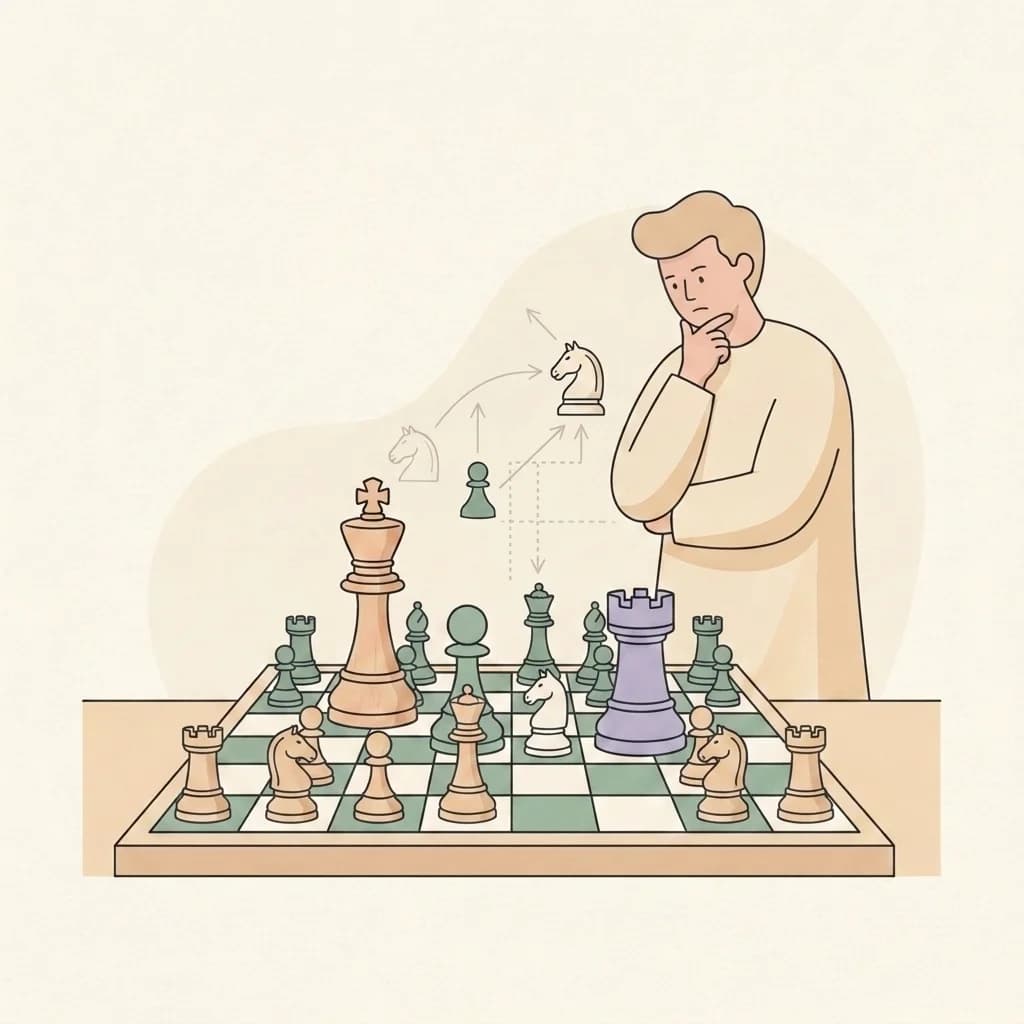
I give my students almost the same structure every time, because it survives real life. One theme per week, two or three model positions maximum, active work rather than passive reading. You pick the theme based on what showed up in your recent games, not based on mood or a video you stumbled on.
A typical week looks like this:
- pick a theme from a recent game
- study two or three model positions
- replay each position without the solution
- tie the theme back to a played game
- review briefly a few days later
The classic trap is staying passive: you read the solution, you nod, you move on. Nothing sticks. Active work means answering yourself before the solution: what is my plan, which piece moves first, which trade helps me, which opponent threat do I need to prevent? Those answers are what transfer into real games.
What to stop doing
The time-wasters in endgame study repeat across students. You try to cover everything, so you skim ; you study without context, so you forget ; you confuse reading with understanding, so you think you know ; you neglect transitions, so you walk into lost endings blind ; you only study flashy positions, so you miss the endings that actually score points.
The useful endgame is almost always plain. One properly understood pawn ending will earn you more rating than a brilliant line you will never see again. If you want a structured frame to pick the right priorities at the right time instead of guessing alone, JD Chess coaching is built exactly for that.
What changes when the method holds
Studying endgames without getting lost is not about knowing everything. It is about narrowing the field, holding one theme per week, and connecting every position back to a real game. The core stays small, and repetition does the rest.
Start with pawn endings, work on ideas before details, plug study into a recent game. That discipline is what makes endgames manageable, and turns a phase that used to feel anxious into a steady source of points.