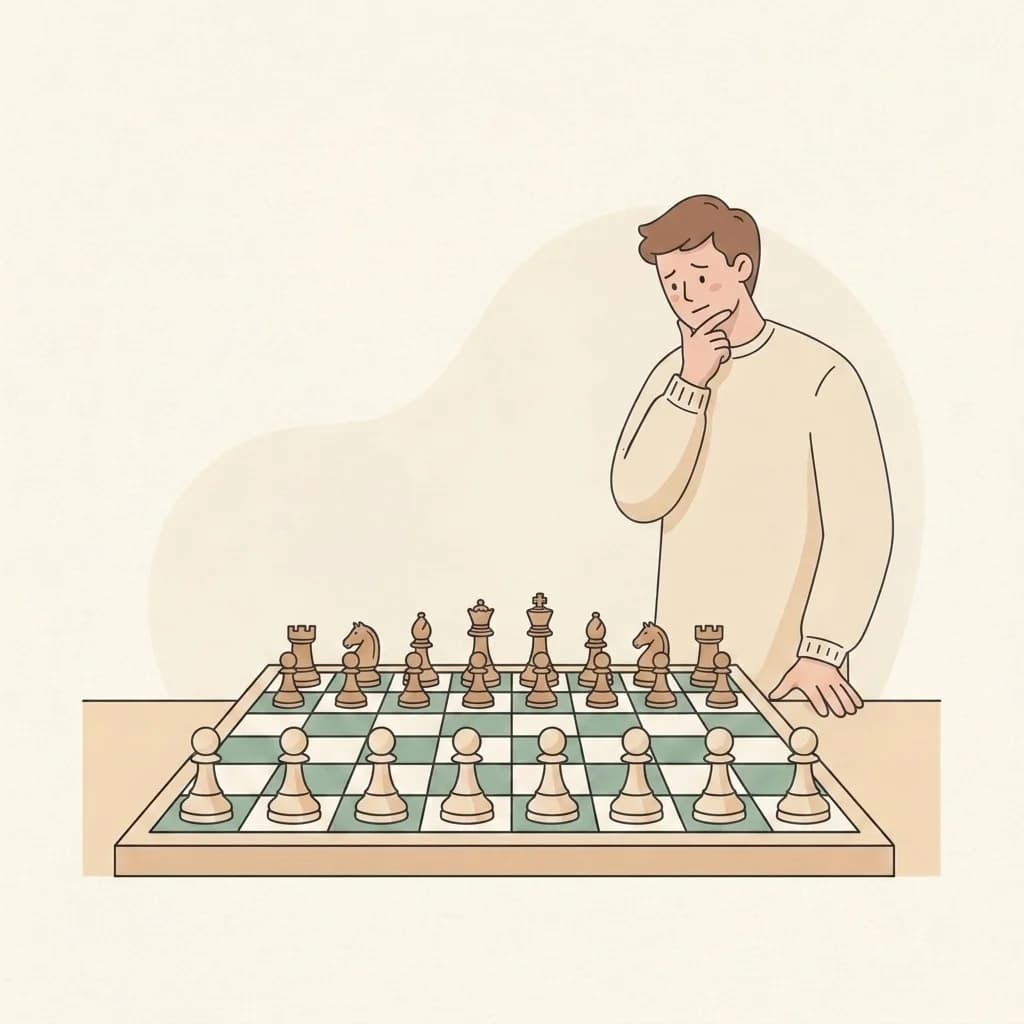


Most players do not lose because they miss tactics. They lose because they do not know what matters in the position. The board looks quiet, nothing is hanging, they drift for four or five moves until something cracks.
What kind of player are you really?
Strategic imbalances are the fix. They give you a concrete way to read a position and pick a plan without guessing. Instead of asking "what is the best move here?" you ask "which side of this position is better for me, and how do I make that count?". If you want that reading skill trained on your own games, online chess coaching is where I drill it with students.
What an imbalance actually is
A strategic imbalance is any difference between the two sides that changes what each player should do. It is about what is asymmetric: one side has more space, the other has the better minor piece, one king is safer, one pawn structure is healthier. Those differences point to the plan.
This framework replaces abstract evaluation with a concrete question: where is the gap, and how do I widen it while keeping my own weaknesses contained?
Pawn structure is usually the first thing to read
Pawn structure is the most reliable long-term guide because pawns move least. Whatever you have at move 15 is likely to still be there at move 30. That stability makes it the best anchor for strategic thinking.
Is one side's structure weaker? Isolated, backward, or doubled pawns each create squares the defender has to babysit and the attacker can target. Is there a pawn majority on one wing? That majority is a long-term candidate for a passed pawn, which shapes whose endgame is better before the endgame arrives.
If your opponent has the weaker structure, the plan writes itself: pressure the weak pawn, restrict its defenders, refuse simplifying trades. If your structure is worse, do not defend passively; look for activity, counterplay, and timing. Passive defense of a permanent weakness loses slowly. For deeper pawn-structure theory, the ChessBase opening surveys regularly break down how top players exploit structural weaknesses move by move.
Piece activity trumps piece count
Active pieces matter more than pretty pieces. A rook on an open file, a knight on a protected outpost, a bishop that sees the whole board: those pieces do real work. A developed piece that cannot participate in the plan is barely worth more than an undeveloped one.
The practical rule my students remember is short: if your pieces are better, keep pieces on; if your pieces are worse, trade them off. It sounds obvious, yet it is violated in half the games I review. Players with the worse bishop refuse the trade because "material is equal". Players with a great knight exchange it for a bad one because the trade was "natural". The trade itself was not the mistake; the refusal to look at piece quality was.
Before any trade, ask one question: which side ends up with the better remaining piece? If the answer is you, take the trade. If the answer is your opponent, do not. For a broader framework on when activity decides the game, how to convert a small advantage in chess is the next step. You can also drill these positions interactively in Lichess Studies, which lets you replay master games with engine analysis.
Space is mobility, not just room
Space is not about comfort. It is about how many useful squares your pieces can reach and how few your opponent's can. A space advantage means you can improve pieces more easily, reroute them faster, and restrict the opponent's counterplay before it starts.
When you have more space, resist the urge to attack immediately. Improve your worst piece first, keep control of central squares, and prevent the opponent from freeing their position with a pawn break. The attack is the reward, not the opening move. Premature attacks against a cramped opponent often miss the moment when the position was ripe because you attacked before your back-rank pieces joined in.
When you have less space, the playbook flips. Trade pieces to relieve the congestion, time a central break to open lines, and avoid passive waiting. A cramped position without counterplay loses itself over ten slow moves. Your job is to create one concrete tension the opponent has to resolve.
King safety rewrites the position
King safety changes everything. If one king is exposed, every other imbalance reorganizes around that fact. Trading into an endgame is usually wrong when your opponent's king is safer than yours; keeping pieces on is right when you are the one attacking.
If your opponent's king is shaky, the plan is direct: open lines toward it, bring attackers in, and refuse the trades that would let them simplify to safety. The attacker's two biggest mistakes are starting the attack before enough pieces are committed, and trading the attackers for defenders out of habit.
If your own king is weaker, do not pretend the position is equal. A material edge is irrelevant if your king is too exposed to use it. Reduce threats, simplify where you can, and accept that your best move may be defensive rather than a continuation of your plan. How strong players manage the clock becomes relevant here because king attacks reward slow, accurate calculation.
Material asymmetry is about type, not count
Material is not only about being up or down. The type matters as much as the count. Two bishops against bishop and knight, rook and minor against queen, queenside majority against kingside majority: these are not "equal" positions. Each asks for a different kind of play.
Two bishops want open positions and diagonals. A rook and minor against a queen need coordinated defense and a safe king, because an active queen tears those setups apart. A queenside majority asks for a different endgame than a kingside one, because the kings usually live on the kingside. Exchange sacrifices and pawn sacrifices for structure belong here too. Ask whether the resulting position plays to your remaining pieces. The FIDE rating and tournament archives are a good place to study top-level games where these asymmetries decided the result.
A checklist for reading the position
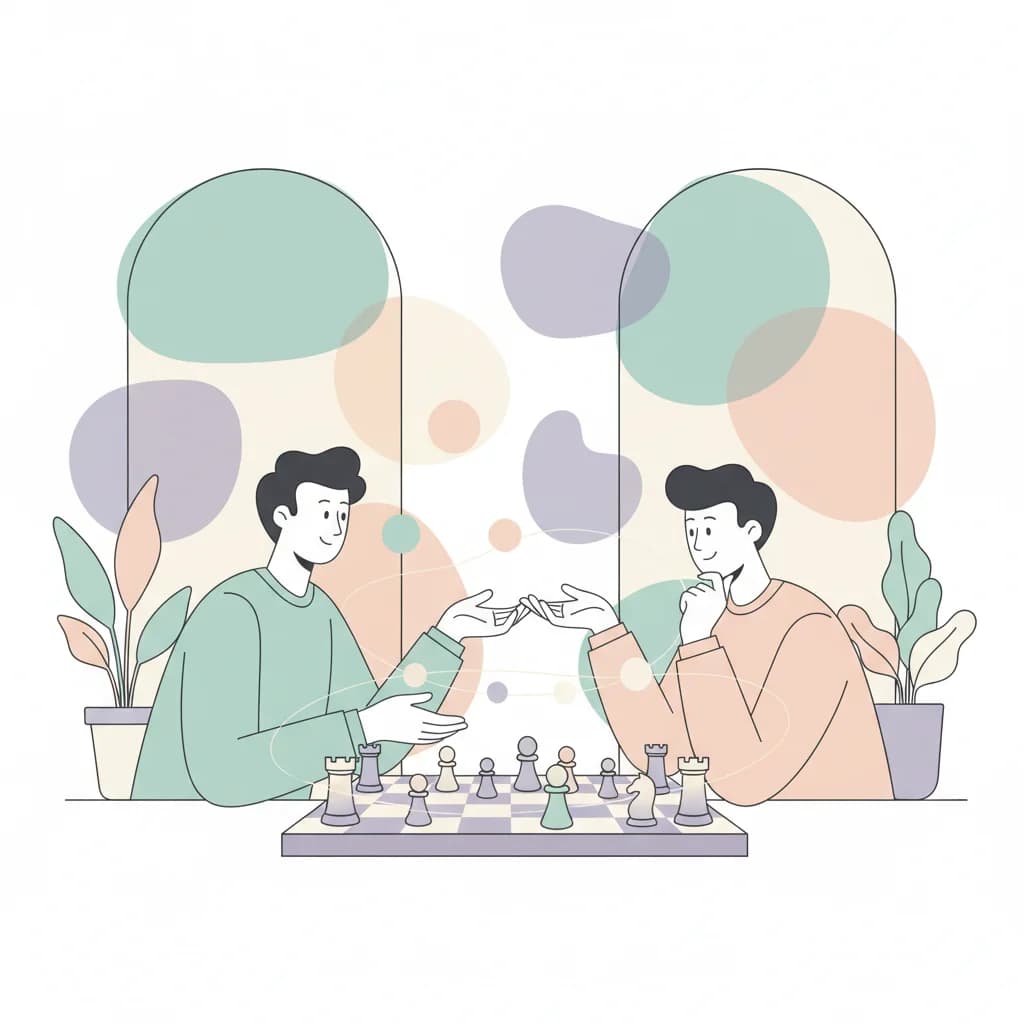
When you reach a new middlegame, do not start by hunting for tricks. Run a fast imbalance check, the same one every time. With practice it takes under thirty seconds.
Ask these five questions:
- Which king is safer?
- Which side has more active pieces?
- Whose pawn structure is healthier?
- Who has more space?
- What is the material story beyond the count?
The answers do not give you a move. They give you a direction. Once you know the direction, the plan narrows to one of three: create pressure on a specific target, reduce the opponent's counterplay, or improve your worst piece. Almost every strong middlegame move at club level fits into one of those buckets.
A concrete example
Imagine you have more space on the queenside, a better bishop, and your opponent has a backward pawn on d6. Launching an attack immediately is wrong; you have not committed enough force yet.
The sequence is: improve your worst piece (usually the passive knight or the rook on a closed file), double on the d-file to pressure d6, restrict the freeing break (often c5 or e5), then open the position. Now the opened lines favor your already-improved pieces.
Reverse it. You are cramped, your bishop is bad, and your opponent has a healthy structure. Playing "for a win" in the abstract is wrong. Generate counterplay before the position locks up: a pawn break that opens your bishop, a trade that relieves the cramp, a central thrust that forces tension on your terms. Same board, opposite imbalances, opposite plans.
The mistakes that kill good positions
Most middlegame errors come from ignoring the imbalance: chasing material when the position called for activity, attacking before the worst piece was improved, ignoring pawn breaks, trading into an inferior minor-piece endgame because "trades simplify", or making moves that look active but target no real weakness.
Each costs the only non-renewable resource in chess: moves. A middlegame is twenty to thirty moves long. Waste six on aimless improvement and your advantage evaporates.
How to train this
Review your own games with the imbalance lens on. For each critical position, write down what the main imbalance was, what plan you chose, whether the plan matched the imbalance, and what you should have prioritized instead. Three games a week is enough if the review is honest. How to analyze your games walks through the sequence, and how to find the turning point in a chess game covers the specific skill of identifying when the imbalance shifted. Platforms like Chess.com game review make this practice fast and repeatable.
Do that for six to eight weeks and your middlegames stop being a guess. You start seeing positions as structures with a direction, not pieces to be shuffled. If you want the broader framework, how to improve at chess efficiently is the right companion read, and the three pillars of chess improvement shows where this strategic work fits in the larger system.
Key takeaways
- Strategic imbalances replace guessing with a concrete reading of the position.
- Pawn structure is the most stable anchor; piece activity, space, king safety, and material type round out the five checks.
- Match the plan to the imbalance: pressure weaknesses, reduce counterplay, or improve your worst piece.
- Trade pieces only when you keep the better remaining piece; refuse simplification when your king is the weaker one.
- Train the lens by reviewing three of your own games a week with imbalance notes for six to eight weeks.
Final rule
If you remember one thing: the right plan is the one that fits the imbalance. It sounds simple because it is, and it is one of the fastest ways to improve your practical chess, because it replaces guessing with a concrete question. Learn to read the imbalance, pick the plan it points to, test it in your games. That is how quiet positions stop being scary and start being decisions. For longer-form study, the New in Chess magazine archive regularly features annotated games organized around exactly these imbalances.
If you want this framework applied to your own games with a coach who reviews them with you, see the JD Chess coaching options.